










Breaking News
 China Will Close the Semiconductor Gap After EUV Lithography Breakthrough
 The Five Big Lies of Vaccinology
 Large global study analyzing data from 192 countries has sparked intense debate by suggesting...
 This is why RAM costs so much
Top Tech News
 EngineAI T800: Born to Disrupt! #EngineAI #robotics #newtechnology #newproduct
 This Silicon Anode Breakthrough Could Mark A Turning Point For EV Batteries [Update]
 Travel gadget promises to dry and iron your clothes – totally hands-free
 Perfect Aircrete, Kitchen Ingredients.
 Futuristic pixel-raising display lets you feel what's onscreen
 Cutting-Edge Facility Generates Pure Water and Hydrogen Fuel from Seawater for Mere Pennies
 This tiny dev board is packed with features for ambitious makers
 Scientists Discover Gel to Regrow Tooth Enamel
 Vitamin C and Dandelion Root Killing Cancer Cells -- as Former CDC Director Calls for COVID-19...
 Galactic Brain: US firm plans space-based data centers, power grid to challenge China



China Will Close the Semiconductor Gap After EUV Lithography Breakthrough
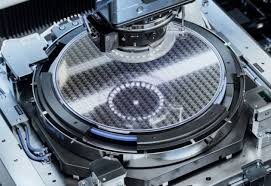
They had a semiconductor Manhattan Project". The prototype was completed in early 2025 and is now undergoing testing. It occupies nearly an entire factory floor and was assembled using reverse-engineered components.
Ramp-up timeline
Functional for chip production around 2028.
More realistic full mass-production capability is around 2030 or later.
In 2030, ASML/TSMC are expected to be on high-NA EUV or next-gen nodes. China will be about 1–2 generations behind initially.
Competitiveness assessment
Significant milestone — China has overcome initial barriers faster than many Western analysts predicted, showing the power of state-directed resources, talent recruitment (high salaries/bonuses for PhDs/ex-ASML experts), and reverse engineering.
Still far from commercial parity — The prototype lags in throughput, yield, reliability, and full integration compared to ASML's mature systems (which took ~20 years to perfect). Yields and costs would likely be much worse initially, and China still depends on imports for some subsystems (e.g., advanced mirrors, resists).
It was built by a team of former engineers from Dutch firm ASML, the world's leading supplier of photolithography machines that etch circuit patterns onto silicon wafers to create chips. They reverse-engineered ASML's EUV machine using parts from older ASML machines obtained in secondary markets, the report said, citing two people with knowledge of the project.
China's prototype EUV machine was yet to produce working chips, the government has set a goal to make advanced integrated circuits on that equipment by 2028.
EUV systems are extremely complex, built from hundreds of thousands of parts across multiple geographies, with no single blueprint.
"Even if China were able to produce some EUV light [from its prototype], turning this into an economically viable manufacturing process could take years, if not decades," Morningstar analyst Javier Correonero wrote in a research note on Thursday.
China's EUV efforts are up against "arguably the best supply chain integration ever built", Correonero said, pointing out ASML's advantage.