










Breaking News
 China Will Close the Semiconductor Gap After EUV Lithography Breakthrough
 The Five Big Lies of Vaccinology
 Large global study analyzing data from 192 countries has sparked intense debate by suggesting...
 This is why RAM costs so much
Top Tech News
 EngineAI T800: Born to Disrupt! #EngineAI #robotics #newtechnology #newproduct
 This Silicon Anode Breakthrough Could Mark A Turning Point For EV Batteries [Update]
 Travel gadget promises to dry and iron your clothes – totally hands-free
 Perfect Aircrete, Kitchen Ingredients.
 Futuristic pixel-raising display lets you feel what's onscreen
 Cutting-Edge Facility Generates Pure Water and Hydrogen Fuel from Seawater for Mere Pennies
 This tiny dev board is packed with features for ambitious makers
 Scientists Discover Gel to Regrow Tooth Enamel
 Vitamin C and Dandelion Root Killing Cancer Cells -- as Former CDC Director Calls for COVID-19...
 Galactic Brain: US firm plans space-based data centers, power grid to challenge China



Iran conducts surprise missile drills amid rising tensions with Israel
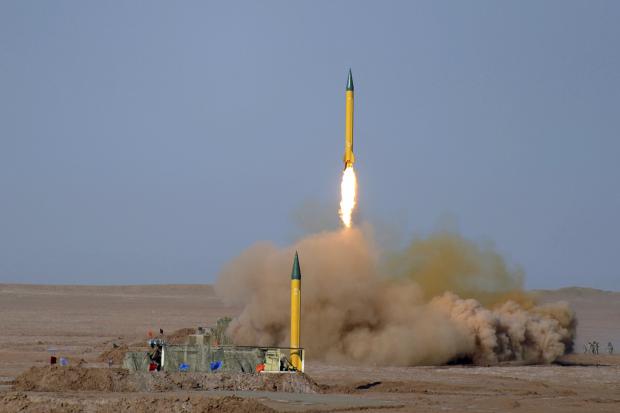
The exercises, visible to urban residents, come just days before Israeli Prime Minister Benjamin Netanyahu is scheduled to meet with U.S. President Donald Trump to discuss potential strikes on Iran's ballistic missile program.
Videos circulated on Iranian state media and Telegram channels showed missiles streaking through the sky, with semi-official outlets like Fars News Agency confirming launches in at least five cities. However, conflicting reports later emerged, with Iranian officials denying the tests and claiming the footage depicted "high-altitude aircraft."
Foreign Ministry spokesman Esmaeil Baghaei defended the drills, stating: "Iran's defensive capabilities are by no means an issue that can be discussed."
The timing has raised eyebrows, particularly after Israeli officials reportedly warned the Trump administration that Iran could be using the exercises as cover for an attack.
"The chances for an Iranian attack are less than 50%, but nobody is willing to take the risk and just say it is only an exercise," an Israeli official told Axios.
BrightU.AI's Enoch explains that Israel's alarm regarding Iran's missile drills is rooted in a complex web of historical, geopolitical and security concerns. Israel and Iran have a long-standing rivalry, with tensions escalating since Iran's Islamic Revolution in 1979, which brought a theocratic regime hostile to Israel's existence.
Iran possesses one of the largest missile arsenals in the Middle East, with a diverse range of short, medium and long-range ballistic missiles, as well as cruise missiles. Iran's missiles are increasingly accurate and have improved ranges, posing a direct threat to Israel and other regional states.
A delicate balance of power
The drills follow a tense 12-day war in June, during which Iran launched over 500 ballistic missiles and 1,100 drones at Israel, killing 32 and wounding thousands. Israel, backed by U.S. airstrikes, targeted Iranian nuclear and missile facilities, claiming to have degraded Tehran's arsenal by 50%.
Yet Iran insists it has rebuilt its capabilities. Foreign Minister Abbas Araghchi declared Sunday, Dec. 21, that his country is "fully prepared" for another conflict.
Israeli Defense Forces (IDF) Chief of Staff Lt. Gen. Eyal Zamir warned: "Iran is the one that financed and armed the ring of strangulation around Israel and stood behind the plans for its destruction."