










Breaking News
 The AI Bird-Flu Scenario They Just Published
 Japan's first robot ambulance works the 9-1-1 lines for humanoids
 Cheap smartphone add-on pinpoints hidden cameras to shut down spies
 The $600 Tank That Beats a $10,000 Powerwall
Top Tech News
 BEYOND THE MOON: NASA plans a nuclear-powered fleet to push DEEPER into space
 Big Oil Backs Mazama's $135 Million Bet On Superhot Geothermal
 Quantum compass takes flight on Northrop's Lumberjack drone
 Terrifying AI Behavior Even Its Creators Couldn't Explain
 WW3 Near-Miss? AI Hallucinated Nuclear Weapons Components Aboard Chinese Vessel Bound For Iran
 Stripe Is Building the Toll Road for the Machine Economy
 Toyota Dakar hopeful swaps twin-turbo V6 for hydrogen fuel cells
 4-min turbo-inflatable cubic camp castle is now available in the USA
 Researchers Used Claude To Hack OpenAI Employee Accounts
 Chinese Scientists Develop New Oil Refining Method That Cuts Energy Use by 90%



How a 1/10 Acre Microfarm Feeds 35 Families All Year Long in Los Angeles
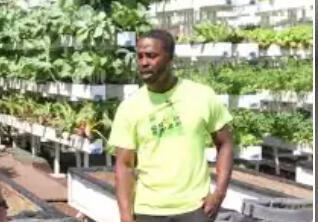
Their terraponic system uses collected and then recycled rainwater to grow nutrient-dense food with minimal water. Terraponics uses 20% soil to 80% water and floods from the bottom of the planter and then water drains back to a reservoir. Crops may be planted closer together because they are not competing for nutrients. Crop Swap LA distributes the fresh produce in their community. It also encourages people to grow food on unused front or back yards.
Crop Swap LA began in 2018 as a way to unite Los Angeles gardeners to grow and share their extra veggies, fruits and herbs. The institution's mission has evolved to transforming lawns and unused spaces into microfarms that utilize irrigation systems with harvested rainwater.
Transportation time for produce to reach a traditional market can range from a few days to a few weeks, during which time the produce loses much of its nutritional value. Vitamin C losses, even when produce is refrigerated "..for 7 days range from 15% for green peas to 77% for green beans" – Dr. Diane M Barrett, Maximizing the Nutritional Value of Fruits and Vegetables.