










Breaking News
 10 Unexpected Consequences Of An Economic Crisis Nobody Is Talking About
 Trump says RAF Fairford terror suspects were 'looking to do big damage' to US forces as Iran
 Syria Opens Overland Fuel Transit Route To Iraq Amid Hormuz Closure
 New Jersey Microsoft-Linked Data Center Hit With Record Fine Over Unpermitted Gas Generators
Top Tech News
 Tesla Model 3 killer charges from 10 to 97% in just 9 minutes
 World-first unpowered DNA computer sets speed record
 I Power 5 Buildings Off-Grid. Here's How
 The US government is pushing hard to get a working nuclear fission reactor into space by late 2028
 SpaceX Starmind AI in Space Radiator
 China Will Dominate Global Nuclear Energy Through 2035, Analyst Says
 These Absolutely Wild-Looking EVs Are Saudi Arabia's First Homegrown Cars
 BEYOND THE MOON: NASA plans a nuclear-powered fleet to push DEEPER into space
 Big Oil Backs Mazama's $135 Million Bet On Superhot Geothermal
 Quantum compass takes flight on Northrop's Lumberjack drone


Simple technique removes over 98% of nanoplastic particles from water
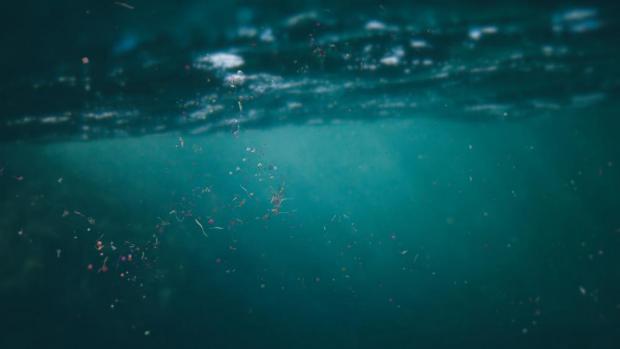
Mount Everest has microplastic contamination. Our drinking water and food, especially processed foods in single-use packaging, are contaminated with microplastics. Recent studies have found microplastics in our blood, lungs, liver, and kidneys ... They've even been found in the placentas of unborn babies.
Studies on the adverse health effects of microplastics in the human body have only recently been done. Respiratory, gastrointestinal, endocrine, developmental and reproductive issues, and even cancers are starting to be linked to the consumption and inhalation of microplastics. Micro and nanoplastics are inescapable. But now researchers from the University of Missouri have developed a relatively simple and safe method of extracting over 98% of nanoplastic particles from water.
Using non-toxic, hydrophobic natural ingredients, researchers were able to create a liquid solvent that floats atop water like oil. When emulsified into the water and then allowed to reseparate, the solvent will then float back to the surface carrying more than 98% of the nanoplastic contaminants back to the surface with it, where it can simply be skimmed off the water. Given its hydrophobic nature, there's little risk of leaving further contamination from the eutectic solvent behind.
"Our strategy uses a small amount of designer solvent to absorb plastic particles from a large volume of water," says Gary Baker, an associate professor in Mizzou's Department of Chemistry. "Currently, the capacity of these solvents is not well understood. In future work, we aim to determine the maximum capacity of the solvent. Additionally, we will explore methods to recycle the solvents, enabling their reuse multiple times if necessary."
We currently have some ways of removing microplastics from our drinking water, depending on the size. Basic activated carbon filters – like you'd find in a Britta – aren't specifically made to remove them, but are fairly effective at removing anything larger than five microns in size. Multi-stage sediment filters with a one-micron pore size are quite good. Reverse osmosis, which squeezes water through pores as small as one ten thousandth of a micron is one of the very best methods for removing contaminants of any sort from water – however, these become clogged and need to be cleaned regularly. Distilling water is nearly 100% effective, but also strips away any healthy minerals that our bodies need.