










Breaking News
 This is the future we shall bring into being
 Elon Musk's Vision For The Future Looks Like A Movie
 Phosphorus Munitions Fired by Israel Burn Groves, Orchards in Southern Lebanon
 Iran's IRGC Warns It Will Expand 'Geography of the War' If the US Attacks Again
Top Tech News
 BEYOND THE MOON: NASA plans a nuclear-powered fleet to push DEEPER into space
 Big Oil Backs Mazama's $135 Million Bet On Superhot Geothermal
 Quantum compass takes flight on Northrop's Lumberjack drone
 Terrifying AI Behavior Even Its Creators Couldn't Explain
 WW3 Near-Miss? AI Hallucinated Nuclear Weapons Components Aboard Chinese Vessel Bound For Iran
 Stripe Is Building the Toll Road for the Machine Economy
 Toyota Dakar hopeful swaps twin-turbo V6 for hydrogen fuel cells
 4-min turbo-inflatable cubic camp castle is now available in the USA
 Researchers Used Claude To Hack OpenAI Employee Accounts
 Chinese Scientists Develop New Oil Refining Method That Cuts Energy Use by 90%



How nose cartilage cells are being weaponized against osteoarthritis
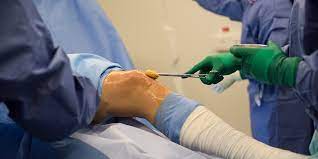
The researchers have since taken some exciting strides forward with their technology, most recently demonstrating how the engineered nasal tissue can not only act as structural reinforcement for troublesome joints, but also how its unique properties can counter inflammation in severe osteoarthritis
The research is the work of scientists at Switzerland's University of Basel, and looks to harness some of the unique capabilities of cells found in the nasal septum, the cartilage in between the nostrils. One thing that separates these cells from those found in articular cartilage in the joints is that that they lack certain genes that inhibit reproduction, meaning they can grow and form cartilage far more easily. Conveniently, this remains the case even as we age, meaning that they could theoretically be used as treatments for deteriorating joints in elderly people.