










Breaking News
 This is the future we shall bring into being
 Elon Musk's Vision For The Future Looks Like A Movie
 Phosphorus Munitions Fired by Israel Burn Groves, Orchards in Southern Lebanon
 Iran's IRGC Warns It Will Expand 'Geography of the War' If the US Attacks Again
Top Tech News
 BEYOND THE MOON: NASA plans a nuclear-powered fleet to push DEEPER into space
 Big Oil Backs Mazama's $135 Million Bet On Superhot Geothermal
 Quantum compass takes flight on Northrop's Lumberjack drone
 Terrifying AI Behavior Even Its Creators Couldn't Explain
 WW3 Near-Miss? AI Hallucinated Nuclear Weapons Components Aboard Chinese Vessel Bound For Iran
 Stripe Is Building the Toll Road for the Machine Economy
 Toyota Dakar hopeful swaps twin-turbo V6 for hydrogen fuel cells
 4-min turbo-inflatable cubic camp castle is now available in the USA
 Researchers Used Claude To Hack OpenAI Employee Accounts
 Chinese Scientists Develop New Oil Refining Method That Cuts Energy Use by 90%



Nüwa seeks to become first sustainable city on Mars with 1 million residents
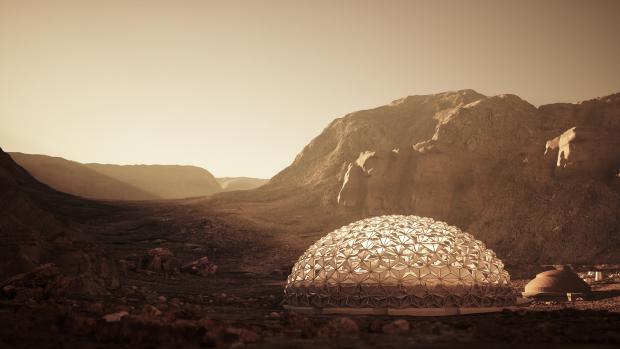
Elon Musk plans to have a city on Mars by 2050. But that's a little easier said than done.
Human survival on another planet, especially one as environmentally hostile as Mars, depends on finding solutions to four key factors: infrastructure, sustainability, shelter and life support, according to Gisela Detrell, an aerospace engineer at Germany's University of Stuttgart.
"There are several issues that we have to face on Mars," Detrell said, "from radiation to providing all the food and oxygen that the people living there would need -- but also looking at how to use the resources on Mars, starting from where would our city be located or which different locations we could have."
Detrell is part of an international team of scientists and academics, architecture firm ABIBOO Studio and the public-private Sustainable Offworld Network (SONet) community that believes they've cracked the code. They've submitted plans to the Mars Society to build Nüwa, the first proposed city for Mars.
With the current Mars missions (UAE's Hope Probe, China's Tianwen-1 mission's rover and NASA's Perseverance rover) researching the potential for life on the red planet and with commercial space travel on the horizon, an experimental city on Mars seems to be the next step. Now What?
Nüwa, named for the Chinese mythological goddess who smelted together colored stones to patch up the sky, would be housed inside a sheer rock face at Tempe Mensa, Mars, where the city's 1 million residents would be protected from damaging cosmic and solar radiation.