










Breaking News
 White House Cancels Coverage For 750,000 ACA Enrollees, Citing Fraud
 Elon Musk Is Powering The American Renaissance
 BBC Memory-Holes Comedy Sketches That Satirized Racism
 China Ranked #1 In World At Math; USA 27th...
Top Tech News
 BEYOND THE MOON: NASA plans a nuclear-powered fleet to push DEEPER into space
 Big Oil Backs Mazama's $135 Million Bet On Superhot Geothermal
 Quantum compass takes flight on Northrop's Lumberjack drone
 Terrifying AI Behavior Even Its Creators Couldn't Explain
 WW3 Near-Miss? AI Hallucinated Nuclear Weapons Components Aboard Chinese Vessel Bound For Iran
 Stripe Is Building the Toll Road for the Machine Economy
 Toyota Dakar hopeful swaps twin-turbo V6 for hydrogen fuel cells
 4-min turbo-inflatable cubic camp castle is now available in the USA
 Researchers Used Claude To Hack OpenAI Employee Accounts
 Chinese Scientists Develop New Oil Refining Method That Cuts Energy Use by 90%



EHang secures first test flight permit in the heart of Europe
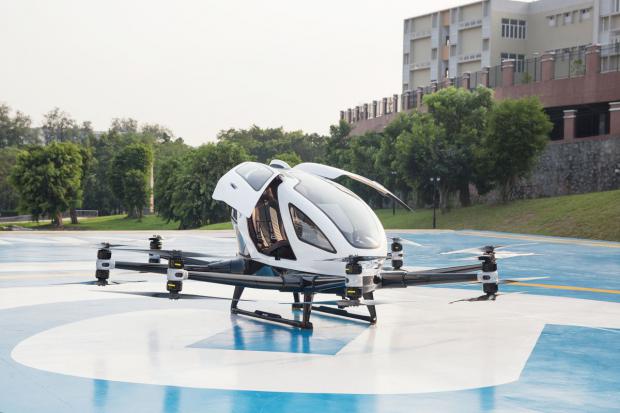
After flying into Spain earlier this year, the air taxi firm has now been granted its first trial flight permit in the European Union – but it's not in Seville.
Since first showing its multi-rotor air taxi actually carrying passengers back in early 2018, EHang has been doubling down on efforts to get its autonomous aerial vehicles into skies around the world.
In addition to committing to building a tourism terminal for its air taxi service in the City of Hezhou in Guangxi Province, and launching an air tourism project at the LN Garden Hotel in Nansha, test flights have been undertaken in the US, South Korea and Dubai.
Now the Civil Aviation Authority of Austria has given the green light for flight tests to take place, a first for the EU but not the first for the continent of Europe, as EHang secured an operational flight permit for long-term testing in Norway back in March.
This latest milestone follows a successful test flight of the two-passenger 216 model last month, which took to the air above St. Martin im Innkreis, flew for several minutes and the landed safely – despite the severe cold and high wind speed.
The EHang 216 features 16 independent rotors mounted in pairs on eight arms circling the cabin, can reach speeds of 130 km/h (80 mph) and has a per charge flight time of 21 minutes.
The Austrian flight permit, obtained together with strategic partner FACC AG, will now allow the company to demonstrate its technology to regulators, customers and partners.