










Breaking News
 How War Propaganda Justifies Conscription Into Unjust Wars
 Trump's "Russian sanctions" Have Destroyed the German Automobile Industry
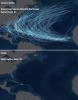 Where are the headlines? 2026 is the 'First Time in 112 Years: No Atlantic Hurricanes By Sept. 2
 CNN Staffers Panic over Paramount Merger: 'Bloodbath Coming,' Newsroom Is 'Like a Funera
Top Tech News
 BEYOND THE MOON: NASA plans a nuclear-powered fleet to push DEEPER into space
 Big Oil Backs Mazama's $135 Million Bet On Superhot Geothermal
 Quantum compass takes flight on Northrop's Lumberjack drone
 Terrifying AI Behavior Even Its Creators Couldn't Explain
 WW3 Near-Miss? AI Hallucinated Nuclear Weapons Components Aboard Chinese Vessel Bound For Iran
 Stripe Is Building the Toll Road for the Machine Economy
 Toyota Dakar hopeful swaps twin-turbo V6 for hydrogen fuel cells
 4-min turbo-inflatable cubic camp castle is now available in the USA
 Researchers Used Claude To Hack OpenAI Employee Accounts
 Chinese Scientists Develop New Oil Refining Method That Cuts Energy Use by 90%



Boston Dynamics' Robot Dog Starts New Work On BP Oil Rig
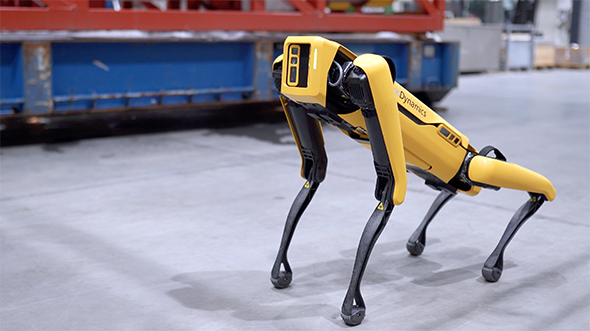
June was the month when Boston Dynamics began selling Spot. By July, Ford Motor Company received the robot dog, equipped with five cameras to survey its Van Dyke Transmission Plant in Michigan.
Ford employed the four-legged robot over human surveyors to save money and time. The Michigan-based automobile manufacture isn't the only company embracing robot dogs to complete mundane tasks generally performed by humans. Reuters notes BP Plc has programed Spot to "read gauges, look for corrosion, map out the facility, and even sniff out methane on its Mad Dog rig."
Adam Ballard, BP's facilities technology manager, said the robot dog would make working on an offshore oil rig safer by reducing the number of people. He said the tasks Spot would be assigned will free up personnel to focus on other mission-critical assignments.
"Several hours a day, several operators will walk the facility; read gauges; listen for noise that doesn't sound right; look out at the horizon for anomalies, boats that may not be caught on radar; look for sheens.
"What we're doing with Spot is really trying to replicate that observation piece," Ballard said, adding that an operator could then review the information from a central location.
"We believe a lot of that up-front, remote work preparation can be done with a remotely-controlled robot... being able to pan, tilt, zoom and really understand the entire area in real conditions, real-time," he said.
BP hopes Spot's ability to gather data on oil rigs will cut down human personnel throughout rigs located in the Gulf of Mexico.
We're sure other companies will follow Ford or BP in the rush to automate their workforce under the cover of the virus pandemic.