










Breaking News
 This is the future we shall bring into being
 Elon Musk's Vision For The Future Looks Like A Movie
 Phosphorus Munitions Fired by Israel Burn Groves, Orchards in Southern Lebanon
 Iran's IRGC Warns It Will Expand 'Geography of the War' If the US Attacks Again
Top Tech News
 BEYOND THE MOON: NASA plans a nuclear-powered fleet to push DEEPER into space
 Big Oil Backs Mazama's $135 Million Bet On Superhot Geothermal
 Quantum compass takes flight on Northrop's Lumberjack drone
 Terrifying AI Behavior Even Its Creators Couldn't Explain
 WW3 Near-Miss? AI Hallucinated Nuclear Weapons Components Aboard Chinese Vessel Bound For Iran
 Stripe Is Building the Toll Road for the Machine Economy
 Toyota Dakar hopeful swaps twin-turbo V6 for hydrogen fuel cells
 4-min turbo-inflatable cubic camp castle is now available in the USA
 Researchers Used Claude To Hack OpenAI Employee Accounts
 Chinese Scientists Develop New Oil Refining Method That Cuts Energy Use by 90%



Stealthy diver delivery boat transforms into a submarine
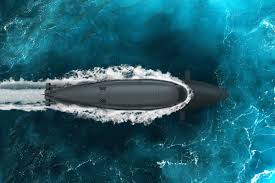
Currently being developed by UK firm SubSea Craft, VICTA measures 11.95 meters long by 2.3 m wide (39.2 by 7.5 ft), and seats six divers plus a pilot and a navigator. Its matte black composite hull is made of carbon fiber with a Diab foam core, for a good strength-to-weight ratio.
When first setting out on a mission, VICTA moves quickly across the surface like a regular boat. In this mode, it's powered by a customized Seatek 725+ diesel engine which outputs 725 bhp to a set of Konsberg Kamewa water jets. In its final form, it should have a top surface speed of 40 knots (46 mph or 74 km/h), a cruising speed of 30 knots (35 mph or 56 km/h) and a fuel range of 250 nautical miles (288 miles or 463 km).
Once it needs to get stealthy, VICTA stops and floods its cabin, submerging within two minutes. It then becomes a "wet sub," meaning that its occupants are immersed in water, and are wearing dive gear. The divers and crew all breathe from an onboard open circuit air system, so the divers don't deplete the air supply in their tanks – the onboard system should keep all eight people breathing for four hours.