










Breaking News
 15 Years After Occupy, the Case Against the System Has Never Been Clearer
 8 Prepper Hacks for Cleaning Without Running Water
 The Economy Is Stagnating
 Britain To Appoint A Dedicated Tax Agent To Every Single Billionaire
Top Tech News
 Tesla Model 3 killer charges from 10 to 97% in just 9 minutes
 World-first unpowered DNA computer sets speed record
 I Power 5 Buildings Off-Grid. Here's How
 The US government is pushing hard to get a working nuclear fission reactor into space by late 2028
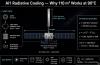 SpaceX Starmind AI in Space Radiator
 China Will Dominate Global Nuclear Energy Through 2035, Analyst Says
 These Absolutely Wild-Looking EVs Are Saudi Arabia's First Homegrown Cars
 BEYOND THE MOON: NASA plans a nuclear-powered fleet to push DEEPER into space
 Big Oil Backs Mazama's $135 Million Bet On Superhot Geothermal
 Quantum compass takes flight on Northrop's Lumberjack drone


Study: Can nanoparticles be used to deliver treatments to injured brain and spinal cord cells?

(Natural News) A research team from Purdue University has designed a cutting-edge treatment that could quickly repair brain and spinal cord cells that have been injured. The treatment method enlists medicated nanoparticles to the injury site, preventing secondary damage to the spine, restoring cellular function, and improving physiological processes. The researchers achieved great results when they tested the treatment out on guinea pig spinal cords.
Silica nanoparticles can deliver life-saving medicine to injured brain and spinal cord cells
Lead researcher Richard Borgens of the School of Veterinary Medicine's Center for Paralysis Research and Welden School of Biomedical Engineering used three primary ingredients in the treatment protocol. The first is polyethylene glycol (PEG). This polymer has been previously studied to treat brain injuries in rats and spinal injuries in dogs. PEG helps target and seal injured spinal cord cells, preventing further injury. The second ingredient is hydralazine. This anti-hypertension drug is carried to the injury site to help restore cellular function. The final and most important ingredient is silica nanoparticles. The pores of the nanoparticles carry the hydralazine to the injury site so the medicine can slowly be released to the brain and spinal cord cells. The nanoparticles are coated with the PEG polymer to stop further injury to the brain and spinal cord cells.
When PEG is injected alone, the polymer does not travel efficiently to the injury site. When it is applied to silica nanoparticles, it can be delivered to the cells with precision. PEG is volatile when its composition is changed. "If you change the composition to make the PEG more potent, it produces ethylene glycol, the poison in antifreeze. If you change the concentration of PEG in another way, the solution becomes syrupy and difficult to inject," says Borgens. The nanoparticles help stabilize its composition, improving its efficacy as a treatment.
When an injury occurs to the spine, the spinal cells produce a toxin called acrolein. According to Borgens, the anti-hypertension drug hydralazine acts as an antidote, neutralizing the toxic effects of acrolein. In the study, Borgens inundated cells with acrolein and then treated them with various combinations of hydralazine and PEG, delivered by silica nanoparticles. Cellular functions were quickly restored when PEG-coated silica nanoparticles introduced hydralazine to the spinal cord cells.
New nanoparticle treatment could potentially save lives
Borgens says the silica nanoparticles are "safe inside bodies" and can be used as much as they are needed. The pores of the nanoparticles can hold the medicine and slowly distribute it over a longer duration of time. The treatment could be used to improve the quality of life of those who have suffered an injury to their neck, head, and spinal cord.
"All ambulances should have PEG on board," Borgens said. "It can probably save thousands of people from more severe head and spinal damage."
A research study published by the Journal of the Royal Society of Medicine titled, "Adverse effects of spinal manipulation: a systematic review" documents 32 case reports of life threatening spinal cord damage caused by chiropractors and other practitioners. The adverse events occurred after a spinal manipulation, a "manual treatment where a vertebral joint is passively moved between the normal range of motion and the limits of its normal integrity." These questionable operations include a high velocity thrust and are most risky when performed on the upper spine, during a cervical neck adjustment. The most common adverse events included vertebral artery dissection, which causes a brain bleed, cerebral edema, and potential cardiac event. Other complications included dural tear, oedema, nerve injury, disc herniation, haematoma and bone fracture.