










Breaking News
 "Begin Preparing Yourself..." - Jeffrey Sachs
 The 5-Year Treasury Just Broke 5%... The Whole Curve Is Next
 ICE Denounced for Enacting 'Official Government Policy of Disappearing People'
 Google Just Told Canadian Adults: Give Us Your ID and a Selfie Or Else…And It's Starting Now!!
Top Tech News
 Tesla Model 3 killer charges from 10 to 97% in just 9 minutes
 World-first unpowered DNA computer sets speed record
 I Power 5 Buildings Off-Grid. Here's How
 The US government is pushing hard to get a working nuclear fission reactor into space by late 2028
 SpaceX Starmind AI in Space Radiator
 China Will Dominate Global Nuclear Energy Through 2035, Analyst Says
 These Absolutely Wild-Looking EVs Are Saudi Arabia's First Homegrown Cars
 BEYOND THE MOON: NASA plans a nuclear-powered fleet to push DEEPER into space
 Big Oil Backs Mazama's $135 Million Bet On Superhot Geothermal
 Quantum compass takes flight on Northrop's Lumberjack drone


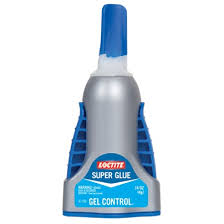
How to Use Super Glue for First Aid
The last time we visited I wrote an article for Daisy about my different first aid kits that I created built on my experience as an Army medic. And she let me know an important item I forgot.
How to use some of the less common items.
There are a lot of items in the kits. Not all may be things everyone is used to. So Daisy asked me to do a series of articles that cover:
When do you need to use this item?
How do you use this item?
What are some warnings about using this item?
In the basic kit, you see basic items. One that stands out is Super Glue. Let's start with that one.
Note from Daisy: The information provided here is for use when there is no medical care available. You should always seek appropriate medical care as your first option.
When do you use that super glue from your first aid kit?
Super glue is one of the greatest inventions. It will bond almost anything. Army Medics and Navy Corpsman were the first to ever use it in the field, during the Vietnam War. They glued more patients back together than they sewed. Placing a standard interrupted suture for every stitch you make two new wounds – two new avenues of infection. Super glues eliminated that route of infection
You can use super glue when you have a cut. Deep or shallow, it doesn't matter – you need to protect it from infection. Sealing the wound is your best bet. Why should you worry about a tiny cut? In the SHTF world, more people will die of infection than major trauma. Why? Because no matter how much people like me preach about diet and washing hands, its human nature to find 5000 more important things to do when you're trying to survive.
How to use super glue on a cut
Using super glue is pretty easy. Just follow a few simple directions. Included are some screen captures from a first aid video I made on how I used medical glue to close a wound in a piece of pork. Meet our victim:


First, make sure the wound is not bleeding and is dry and CLEAN. Notice how clean is in bold type. If you seal a wound and it is not clean you are making an incubator. Warm, wet, dark and chock full of goodness for bacteria to eat. Blood poisoning or as we say in the biz, Septicemia, is fatal. Even with 21st-century medication and care. You do not want someone to experience that type of death.
Once the wound is clean and dry, you'll start to apply the super glue. Whoa! Hold up there cowboy! Don't just dump it in there! A very close and dear friend of mine closed a deep wound on his arm once it healed there was almost no scar. He had cut it on a piece of metal roofing. Deep and long. He cleaned it perfectly got it dry. And closed it. But he closed both the muscle and the skin and discovered a new meaning to the word. ITCH. When you apply super glue below the skin level, the body thinks it's being invaded and attacks it. My friend had a knot under his skin and a deep itch for months.