










Breaking News
 "Begin Preparing Yourself..." - Jeffrey Sachs
 The 5-Year Treasury Just Broke 5%... The Whole Curve Is Next
 ICE Denounced for Enacting 'Official Government Policy of Disappearing People'
 Google Just Told Canadian Adults: Give Us Your ID and a Selfie Or Else…And It's Starting Now!!
Top Tech News
 Tesla Model 3 killer charges from 10 to 97% in just 9 minutes
 World-first unpowered DNA computer sets speed record
 I Power 5 Buildings Off-Grid. Here's How
 The US government is pushing hard to get a working nuclear fission reactor into space by late 2028
 SpaceX Starmind AI in Space Radiator
 China Will Dominate Global Nuclear Energy Through 2035, Analyst Says
 These Absolutely Wild-Looking EVs Are Saudi Arabia's First Homegrown Cars
 BEYOND THE MOON: NASA plans a nuclear-powered fleet to push DEEPER into space
 Big Oil Backs Mazama's $135 Million Bet On Superhot Geothermal
 Quantum compass takes flight on Northrop's Lumberjack drone


The DNA data storage machine that's the size of a school bus
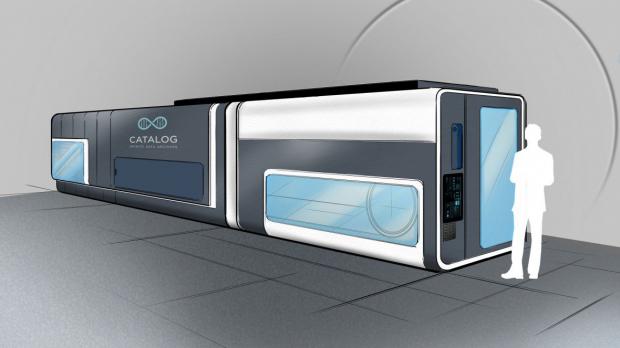
In a world awash with data, DNA is a hugely compact way to store it. The data on every iPhone, PC, and server rack on the planet could fit in a Jacuzzi's worth of genetic letters, for example. It's also incredibly durable: DNA can last for thousands of years so long as it's kept relatively cool and dry.
Now, one of the fledgling industry's startups has unveiled plans for its prototype storage device: a hulking school-bus-size machine that could one day convert movies or data archives into invisible pellets of DNA. The device is being built by Catalog Technologies along with UK firm Cambridge Consultants, it was announced today.
Several teams have already shown it's possible to store GIFs, books, gift cards, and other data in DNA and then retrieve these files.
The problem is that converting bits into the As, Gs, Cs, and Ts of the genetic code is slow, and it's a laborious process to retrieve the data. The cost of manufacturing customized DNA is also high, running near a million dollars to store a couple of high-resolution DVDs.