










Breaking News
 "Begin Preparing Yourself..." - Jeffrey Sachs
 The 5-Year Treasury Just Broke 5%... The Whole Curve Is Next
 ICE Denounced for Enacting 'Official Government Policy of Disappearing People'
 Google Just Told Canadian Adults: Give Us Your ID and a Selfie Or Else…And It's Starting Now!!
Top Tech News
 Tesla Model 3 killer charges from 10 to 97% in just 9 minutes
 World-first unpowered DNA computer sets speed record
 I Power 5 Buildings Off-Grid. Here's How
 The US government is pushing hard to get a working nuclear fission reactor into space by late 2028
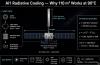 SpaceX Starmind AI in Space Radiator
 China Will Dominate Global Nuclear Energy Through 2035, Analyst Says
 These Absolutely Wild-Looking EVs Are Saudi Arabia's First Homegrown Cars
 BEYOND THE MOON: NASA plans a nuclear-powered fleet to push DEEPER into space
 Big Oil Backs Mazama's $135 Million Bet On Superhot Geothermal
 Quantum compass takes flight on Northrop's Lumberjack drone


Maple leaves may hold the key to wrinkle-prevention

Based on findings from a previous study on maple sap and syrup, a team from the University of Rhode Island recently set out to determine if leaf extracts from red maple trees could block elastase activity. More specifically, they were looking at compounds called glucitol-core-containing gallotannins (GCGs).
In both test tube experiments and computer models, it was found that GCGs containing multiple galloyl groups (which are a type of phenolic group) were particularly effective at doing so – much more so than ones containing a single galloyl group. As a side benefit, these same compounds may also be able to protect skin against inflammation, and lighten unwanted dark spots.