










Breaking News
 "Begin Preparing Yourself..." - Jeffrey Sachs
 The 5-Year Treasury Just Broke 5%... The Whole Curve Is Next
 ICE Denounced for Enacting 'Official Government Policy of Disappearing People'
 Google Just Told Canadian Adults: Give Us Your ID and a Selfie Or Else…And It's Starting Now!!
Top Tech News
 Tesla Model 3 killer charges from 10 to 97% in just 9 minutes
 World-first unpowered DNA computer sets speed record
 I Power 5 Buildings Off-Grid. Here's How
 The US government is pushing hard to get a working nuclear fission reactor into space by late 2028
 SpaceX Starmind AI in Space Radiator
 China Will Dominate Global Nuclear Energy Through 2035, Analyst Says
 These Absolutely Wild-Looking EVs Are Saudi Arabia's First Homegrown Cars
 BEYOND THE MOON: NASA plans a nuclear-powered fleet to push DEEPER into space
 Big Oil Backs Mazama's $135 Million Bet On Superhot Geothermal
 Quantum compass takes flight on Northrop's Lumberjack drone


The "Big Bang" of Alzheimer's: Breakthrough study uncovers genesis of the disease
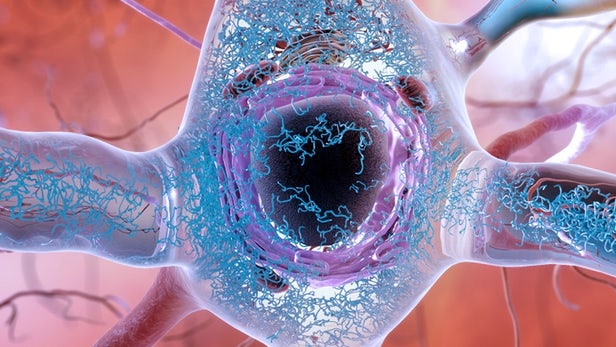
Impressive new research led by scientists at UT Southwestern, has discovered the earliest point in a neurodegenerative process that is thought to lead to dementia. The researchers describe the discovery as like finding the "Big Bang" of Alzheimer's disease, and it's hoped the work leads to new treatments and ways to detect the disease before major symptoms take hold.
"This is perhaps the biggest finding we have made to date," says Marc Diamond, a primary collaborator on this new study, "though it will likely be some time before any benefits materialize in the clinic. This changes much of how we think about the problem."
Much modern Alzheimer's research concentrates on a specific protein called amyloid beta, and the clumping of that protein is suspected as being the primary pathological cause of the disease's symptoms. But, after a long series of clinical trial failures in drugs designed to target those amyloid beta plaques, some scientists are turning their research attentions elsewhere.
This new research focuses on a different protein, called tau. These tau proteins have been found to form abnormal clumps in the brain, called neurofibrillary tangles, which can accumulate and kill neurons. Some researchers hypothesize that this is actually the primary causative source of Alzheimer's disease.
Until now it was not known how, or when, these tau proteins began to accumulate into tangles in the brain. It was previously believed that isolated tau proteins didn't have a distinctly harmful shape until they began to aggregate with other tau proteins. But the new research has revealed that a toxic tau protein actually presents itself as misfolded, exposing parts that are usually folded inside, before it begins to aggregate. It is these exposed parts of the protein that enable aggregation, forming the larger toxic tangles.