










Breaking News
 "Begin Preparing Yourself..." - Jeffrey Sachs
 The 5-Year Treasury Just Broke 5%... The Whole Curve Is Next
 ICE Denounced for Enacting 'Official Government Policy of Disappearing People'
 Google Just Told Canadian Adults: Give Us Your ID and a Selfie Or Else…And It's Starting Now!!
Top Tech News
 Tesla Model 3 killer charges from 10 to 97% in just 9 minutes
 World-first unpowered DNA computer sets speed record
 I Power 5 Buildings Off-Grid. Here's How
 The US government is pushing hard to get a working nuclear fission reactor into space by late 2028
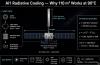 SpaceX Starmind AI in Space Radiator
 China Will Dominate Global Nuclear Energy Through 2035, Analyst Says
 These Absolutely Wild-Looking EVs Are Saudi Arabia's First Homegrown Cars
 BEYOND THE MOON: NASA plans a nuclear-powered fleet to push DEEPER into space
 Big Oil Backs Mazama's $135 Million Bet On Superhot Geothermal
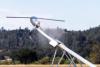 Quantum compass takes flight on Northrop's Lumberjack drone


Research shows exercise helps keep cancer in remission

(Natural News) A study published in the International Journal of Sports Medicine has revealed that cancer survivors (CS) may gain significant benefits from undergoing physical activity (PA). However, the optimal dose of physical activity remains unclear due to a variety of reasons including types of cancer, illness stages and treatments, low cardiorespiratory fitness and physical inactivity.
In line with this, a team of researchers enrolled 152 inactive CS in order to identify and develop exercise prescription guidelines for the patient population. The scientists then instructed the patients to perform a cardiopulmonary exercise test (CPET). Data on the patients' peak oxygen uptake, ventilatory threshold, and respiratory compensation point were used to identify three exercise intensity zones to create exercise intensity classification guidelines for CS.
The results show that CS had lower than estimated values for peak heart rate and peak oxygen uptake. The findings also reveal that moderate intensity zone for CS is different from the current exercise guidelines for a healthy population. The research team also observed that exercise intensity guidelines for healthy populations are not applied to CS. The experts stress that specific exercise guidelines should be used in CS in order to optimize the beneficial effects of physical activities in patients.
"These data suggest that intensities in PA guidelines for healthy population are not adjusted to the characteristics of CS. For individual exercise prescription in CS, when there is no availability for performing a CPET, specific PA guidelines for CS should be used in order to maximize the benefits obtainable by the use of aerobic exercise training. Furthermore, exercise program should be initiated as early as possible after the cancer diagnosis to improve their quality of life," the researchers conclude in Research Gate online.