










Breaking News
 "Begin Preparing Yourself..." - Jeffrey Sachs
 The 5-Year Treasury Just Broke 5%... The Whole Curve Is Next
 ICE Denounced for Enacting 'Official Government Policy of Disappearing People'
 Google Just Told Canadian Adults: Give Us Your ID and a Selfie Or Else…And It's Starting Now!!
Top Tech News
 Tesla Model 3 killer charges from 10 to 97% in just 9 minutes
 World-first unpowered DNA computer sets speed record
 I Power 5 Buildings Off-Grid. Here's How
 The US government is pushing hard to get a working nuclear fission reactor into space by late 2028
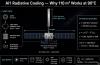 SpaceX Starmind AI in Space Radiator
 China Will Dominate Global Nuclear Energy Through 2035, Analyst Says
 These Absolutely Wild-Looking EVs Are Saudi Arabia's First Homegrown Cars
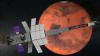 BEYOND THE MOON: NASA plans a nuclear-powered fleet to push DEEPER into space
 Big Oil Backs Mazama's $135 Million Bet On Superhot Geothermal
 Quantum compass takes flight on Northrop's Lumberjack drone


NASA readies probe to touch the sun with 'cutting-edge heat shield'
For the first time in human history, we are going to "touch the sun".
As NASA prepares for an Aug. 4 launch, it has unveiled a "cutting-edge heat shield", installed on June 27, that will keep the spacecraft from being burnt to a crisp.
The probe's mission will take it within 4 million miles of the sun, a region of space never before visited by a human-made spacecraft. For comparison's sake, the closest that Mercury ever gets to the sun is approximately 29 million miles. Getting that close to what is, essentially, a giant ball of fire requires some significant enhancements.
That's where the Thermal Protection System comes in.