










Breaking News
 "Begin Preparing Yourself..." - Jeffrey Sachs
 The 5-Year Treasury Just Broke 5%... The Whole Curve Is Next
 ICE Denounced for Enacting 'Official Government Policy of Disappearing People'
 Google Just Told Canadian Adults: Give Us Your ID and a Selfie Or Else…And It's Starting Now!!
Top Tech News
 Tesla Model 3 killer charges from 10 to 97% in just 9 minutes
 World-first unpowered DNA computer sets speed record
 I Power 5 Buildings Off-Grid. Here's How
 The US government is pushing hard to get a working nuclear fission reactor into space by late 2028
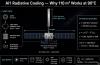 SpaceX Starmind AI in Space Radiator
 China Will Dominate Global Nuclear Energy Through 2035, Analyst Says
 These Absolutely Wild-Looking EVs Are Saudi Arabia's First Homegrown Cars
 BEYOND THE MOON: NASA plans a nuclear-powered fleet to push DEEPER into space
 Big Oil Backs Mazama's $135 Million Bet On Superhot Geothermal
 Quantum compass takes flight on Northrop's Lumberjack drone


"Game-changing" synthesized antibiotic successfully treats infections for the first time

Now an international team of researchers has, for the first time, successfully synthesized the compound and used it to treat a bacterial infection in mice. This is an important milestone in the quest to develop a new antibiotic in the war against antibiotic-resistant superbugs.
"When teixobactin was discovered it was groundbreaking in itself as a new antibiotic which kills bacteria without detectable resistance including superbugs such as MRSA, but natural teixobactin was not created for human use," explains Ishwar Singh, one of the scientists involved in the new research.
Late last year, a University of Lincoln team revealed it had successfully developed a synthesized version of teixobactin, with an easier synthesis process speeding up a single coupling step from 30 hours to just 10 minutes. At the time, the potency of the new synthesized drug was only demonstrated in vitro.