










Breaking News
 'UNFAIR': Mamdani's city-run grocer plan SLAPPED with lawsuit
 Trump Says If Iran Had a Nuclear Weapon, He Would Have Politely Called the Supreme Leader...
 Tucker Carlson: We are on the brink of a world war that ends with the use of nuclear weapons
 Who is trying to destroy the United States and the world?
Top Tech News
 Freezable titanium plate keeps your cooler chilled way longer than ice packs
 Review: Affordable thermal device is made for discovering life outdoors
 AI Whistleblower Tells Tucker How AI Could Kill All Humans by 2040
 You Hate Flock? Well There's More...
 Will Spiking Diesel Prices Drive Autonomous Trucking?
 Chinese Concept Video Imagines the Future of Warfare
 OPTIMUS CONFIRMED: 15,000 Bots This Year -- Tesla to $3,000
 What is Going On With Robotaxi and Cybercab? Here Are All the Answers
 Floating data center would provide water and electricity to 32,000 homes
 OpenAI Cuts Off Elon's Cursor, Humanity's First Star Probe, and Trump's Nuclear Mars Shi



This Hypersonic Space Plane Will Fly From London to N.Y.C. in an Hour
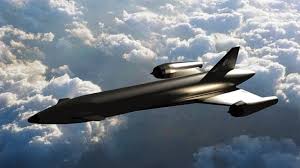
After the NASA space shuttle was retired in 2011, it seemed like space planes might become relics. But they are on a comeback. U.S. companies Sierra Space Corp., Dawn Aerospace, and Radian Aerospace have all introduced their own versions of an aircraft that takes off like a plane, but soars like a rocket. Virgin Galactic soon plans to introduce the Delta version of its space plane. Among militaries, the U.S. Air Force operates a robotic orbital space plane called the X-37B, while China has a similar aircraft called Shelong.
The European Space Agency (ESA) recently jumped into the burgeoning space-plane sector, announcing funding for a new research program called Invictus, which will develop a hypersonic space plane capable of Mach 5 (3,386 mph). The aircraft could fly from London to New York in an hour. If plans stay on track, it could be operational by 2031.
U.K. consulting firm Frazer-Nash will lead the project, which will use technology developed by Reaction Engines Ltd., a private firm launched in 1989 that previously designed a space plane called Skylon. That, in turn, was based on a 1982 concept called the Horizontal Take-Off and Landing (HOTOL) space plane. Last year, Reaction Engines ran into financial difficulties and went out of business.
Invictus plans to incorporate the "pre-cooler" technology from Reaction's SABRE (Synergetic Air-Breathing Rocket Engine) for its new aircraft. Combining aspects of jet and rocket propulsion, the engine pulls oxygen out of the air at lower atmospheric levels to reduce the need to carry propellant, resulting in a much lighter, more efficient aircraft. In space, it will be fueled by liquid hydrogen.
"Aircraft that fly at hypersonic speeds—more than five times the speed of sound—face extremely high temperatures due to shock heating and the friction from the air," a Frazer-Nash rep told Space.com. "Typical aircraft engines cannot operate in these conditions, as the air is too hot to handle." The pre-cooler technology, which chills superheated air in a fraction of a second, has already been successfully tested on conventional jet engines. "It allows these aircraft engines to travel at hypersonic speeds," says the rep.
If Invictus reaches its full potential, it could help unlock the next generation of space planes. "We are laying the foundation for aircraft that take off like planes and reach orbit like rockets—revolutionizing both terrestrial and orbital transportation," said Tomasso Ghidini, head of ESA's mechanical department in a statement. "That will redefine how we move across the planet and reach beyond it."