










Breaking News
 Iran Is Watching Its Economy Collapse in Real Time
 California's New Tire Rule will Result in Higher Costs and More Highway Deaths
 Covid Was a Praxeological Test. Too Many Libertarians Failed.
 This Is What A "Perfect Storm" Looks Like:
Top Tech News
 Tesla Model 3 killer charges from 10 to 97% in just 9 minutes
 World-first unpowered DNA computer sets speed record
 I Power 5 Buildings Off-Grid. Here's How
 The US government is pushing hard to get a working nuclear fission reactor into space by late 2028
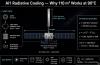 SpaceX Starmind AI in Space Radiator
 China Will Dominate Global Nuclear Energy Through 2035, Analyst Says
 These Absolutely Wild-Looking EVs Are Saudi Arabia's First Homegrown Cars
 BEYOND THE MOON: NASA plans a nuclear-powered fleet to push DEEPER into space
 Big Oil Backs Mazama's $135 Million Bet On Superhot Geothermal
 Quantum compass takes flight on Northrop's Lumberjack drone


Branson's Virgin Hyperloop One to build test track in India
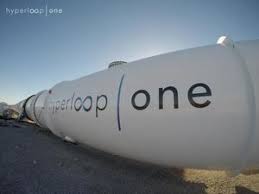
Together with the local government, Richard Branson's Virgin Hyperloop One has today announced plans to build a 25-minute Hyperloop connection between the Indian cities of Pune and Mumbai, which is currently a two-hour trip by car.
A fully developed Hyperloop would see passenger and cargo pods travel through near-vacuum tubes at around 700 mph (1,126 km/h). Virgin Hyperloop One has its competitors, but it is the only Hyperloop company so far to build a full-scale test track, pod and shuttle it along at anything close to this velocity, with a 387 km/h (240 mph) effort in December its fastest run so far.
But the lack of a proven system doesn't appear to be a problem for the growing number of governments around the world forming agreements with the company.