










Breaking News
 Iran Is Watching Its Economy Collapse in Real Time
 California's New Tire Rule will Result in Higher Costs and More Highway Deaths
 Covid Was a Praxeological Test. Too Many Libertarians Failed.
 This Is What A "Perfect Storm" Looks Like:
Top Tech News
 Tesla Model 3 killer charges from 10 to 97% in just 9 minutes
 World-first unpowered DNA computer sets speed record
 I Power 5 Buildings Off-Grid. Here's How
 The US government is pushing hard to get a working nuclear fission reactor into space by late 2028
 SpaceX Starmind AI in Space Radiator
 China Will Dominate Global Nuclear Energy Through 2035, Analyst Says
 These Absolutely Wild-Looking EVs Are Saudi Arabia's First Homegrown Cars
 BEYOND THE MOON: NASA plans a nuclear-powered fleet to push DEEPER into space
 Big Oil Backs Mazama's $135 Million Bet On Superhot Geothermal
 Quantum compass takes flight on Northrop's Lumberjack drone


Edible Graphene Is Here, And Electronics In Your Food Are Coming
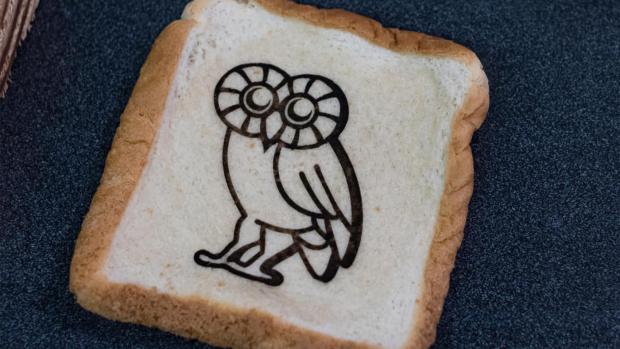
It's the world's only man-made 2D material, and physicists believe it could change the way we live. Graphene, a line of carbon that's a mere atom thick, is several times stronger than steel and 100 times more conductive than copper. But this wonder material has yet to find a breakout application. As the New Yorker put it in 2014, "Graphene may be the most remarkable substance ever discovered. But what is it for?"
Now, we might know. Rice University researchers have successfully used a commercial laser to transform the surface carbon in foods–like toast, coconuts shells, potatoes, and Girl Scout cookies–into graphene. Without using any special vacuums or clean rooms, graphene can be patterned into an impossibly thin, edible circuit–including fuel cells to store power, radio hardware to transmit data, glowing elements to light up, and even all sorts of sensors, too. These circuits resemble a dark, inky tattoo, a bit like very burnt toast.