










Breaking News
 Iran Is Watching Its Economy Collapse in Real Time
 California's New Tire Rule will Result in Higher Costs and More Highway Deaths
 Covid Was a Praxeological Test. Too Many Libertarians Failed.
 This Is What A "Perfect Storm" Looks Like:
Top Tech News
 Tesla Model 3 killer charges from 10 to 97% in just 9 minutes
 World-first unpowered DNA computer sets speed record
 I Power 5 Buildings Off-Grid. Here's How
 The US government is pushing hard to get a working nuclear fission reactor into space by late 2028
 SpaceX Starmind AI in Space Radiator
 China Will Dominate Global Nuclear Energy Through 2035, Analyst Says
 These Absolutely Wild-Looking EVs Are Saudi Arabia's First Homegrown Cars
 BEYOND THE MOON: NASA plans a nuclear-powered fleet to push DEEPER into space
 Big Oil Backs Mazama's $135 Million Bet On Superhot Geothermal
 Quantum compass takes flight on Northrop's Lumberjack drone


New Superhydrophobic/Superhydrophilic bandage material reduces blood loss by 60%
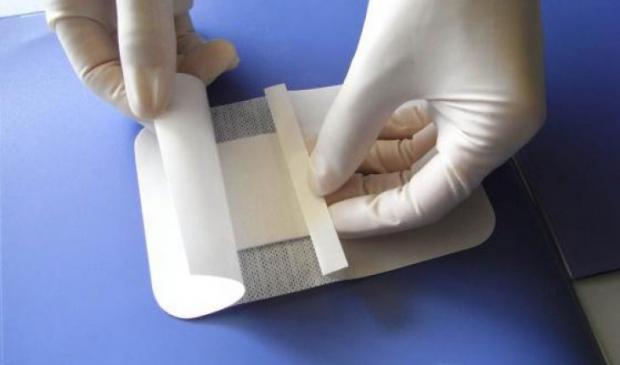
They built a micro-nano structured layer in a surface of traditional gauze fiber with medical long-chain paraffin using nanotechnology, turning the conventional gauze blood-phobic from blood-philic. The gauze is thus freed from blood infiltration after processing with this technology.
They further superimposed the gauze over conventional gauze, using the lower gauze to promote blood coagulation and the upper layer to produce negative pressure to prevent blood soaking and infiltration to achieve effective hemostasis and lower blood loss.
Animal experiments show the survival time of rats bleeding from the carotid artery extended by about 40 percent by the new hemostatic gauze, which is expected to allow more time for victim rescue.
Advanced Healthcare Materials – Superhydrophobic/Superhydrophilic Janus Fabrics Reducing Blood Loss
Hemostatic fabrics are most commonly used in baseline emergency treatment; however, the unnecessary blood loss due to the excessive blood absorption by traditional superhydrophilic fabrics is overlooked. Herein, for the first time, superhydrophobic/superhydrophilic Janus fabrics (superhydrophobic on one side and superhydrophilic on the other) are proposed: the superhydrophilic part absorbs water in the blood to expedite the clotting while the superhydrophobic part prevents blood from further permeating.