










Breaking News
 Xi backs AI safety with Trump, draws Taiwan line, urges Iran talks
 The Israeli Lobby Boasts of Its Rule of America
 Dan Priestly and Lars Lead the Tesla Semi Event
 Russia and China have a plan to disable Starlink
Top Tech News
 Tesla Model 3 killer charges from 10 to 97% in just 9 minutes
 World-first unpowered DNA computer sets speed record
 I Power 5 Buildings Off-Grid. Here's How
 The US government is pushing hard to get a working nuclear fission reactor into space by late 2028
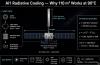 SpaceX Starmind AI in Space Radiator
 China Will Dominate Global Nuclear Energy Through 2035, Analyst Says
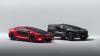 These Absolutely Wild-Looking EVs Are Saudi Arabia's First Homegrown Cars
 BEYOND THE MOON: NASA plans a nuclear-powered fleet to push DEEPER into space
 Big Oil Backs Mazama's $135 Million Bet On Superhot Geothermal
 Quantum compass takes flight on Northrop's Lumberjack drone


Job One for Quantum Computers: Boost Artificial Intelligence

Most people thought she was mixing oil and water. "I had a heck of a time getting published," she recalled. "The neural-network journals would say, 'What is this quantum mechanics?' and the physics journals would say, 'What is this neural-network garbage?'"Today the mashup of the two seems the most natural thing in the world. Neural networks and other machine-learning systems have become the most disruptive technology of the 21st century. They out-human humans, beating us not just at tasks most of us were never really good at, such as chess and data-mining, but also at the very types of things our brains evolved for, such as recognizing faces, translating languages and negotiating four-way stops. These systems have been made possible by vast computing power, so it was inevitable that tech companies would seek out computers that were not just bigger, but a new class of machine altogether.