










Breaking News
 Xi backs AI safety with Trump, draws Taiwan line, urges Iran talks
 The Israeli Lobby Boasts of Its Rule of America
 Dan Priestly and Lars Lead the Tesla Semi Event
 Russia and China have a plan to disable Starlink
Top Tech News
 Tesla Model 3 killer charges from 10 to 97% in just 9 minutes
 World-first unpowered DNA computer sets speed record
 I Power 5 Buildings Off-Grid. Here's How
 The US government is pushing hard to get a working nuclear fission reactor into space by late 2028
 SpaceX Starmind AI in Space Radiator
 China Will Dominate Global Nuclear Energy Through 2035, Analyst Says
 These Absolutely Wild-Looking EVs Are Saudi Arabia's First Homegrown Cars
 BEYOND THE MOON: NASA plans a nuclear-powered fleet to push DEEPER into space
 Big Oil Backs Mazama's $135 Million Bet On Superhot Geothermal
 Quantum compass takes flight on Northrop's Lumberjack drone


Progress to molecular quantum computing
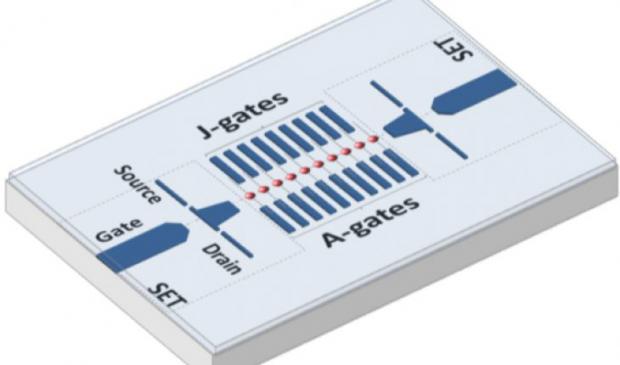
A quantum computer is predicted to bring with it an exponential speed up in computational power. This is because instead of performing calculations one after the other like a conventional computer, a quantum computer works in parallel, looking at all the possible outcomes at the same time. The result is massively parallel computing, allowing us to solve problems in minutes that otherwise would take thousands of years.
Michelle Simmons at the University of New South Wales (UNSW) in Sydney, Australia, are developing their own ways of building quantum computers using silicon. In May 2017, she founded an Aus$83 million (US$65 million) start-up called Silicon Quantum Computing, backed in part by the Australian government.