










Breaking News
 Xi backs AI safety with Trump, draws Taiwan line, urges Iran talks
 The Israeli Lobby Boasts of Its Rule of America
 Dan Priestly and Lars Lead the Tesla Semi Event
 Russia and China have a plan to disable Starlink
Top Tech News
 Tesla Model 3 killer charges from 10 to 97% in just 9 minutes
 World-first unpowered DNA computer sets speed record
 I Power 5 Buildings Off-Grid. Here's How
 The US government is pushing hard to get a working nuclear fission reactor into space by late 2028
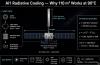 SpaceX Starmind AI in Space Radiator
 China Will Dominate Global Nuclear Energy Through 2035, Analyst Says
 These Absolutely Wild-Looking EVs Are Saudi Arabia's First Homegrown Cars
 BEYOND THE MOON: NASA plans a nuclear-powered fleet to push DEEPER into space
 Big Oil Backs Mazama's $135 Million Bet On Superhot Geothermal
 Quantum compass takes flight on Northrop's Lumberjack drone


These Star Wars-Like 3D Projections Are More Epic Than Any Hologram You've Ever Seen
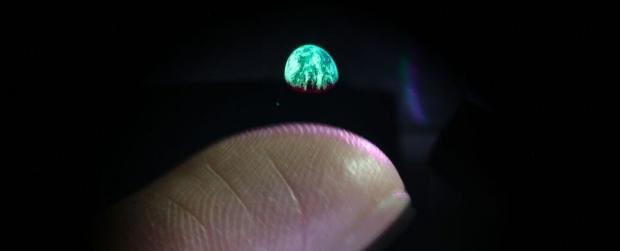
Holograms are pretty cool, sure. But they're still just two-dimensional projections that hover in the air, and as soon as you step to the side, the magic disappears, revealing how flat the thing really is.
But now researchers from Brigham Young University have demonstrated they can create fully three-dimensional projections of moving images - and they use light and particles in the air to achieve this.
The end result is closer than ever to the miniature Princess Leia projection in Star Wars: A New Hope, and that's no accident.
"We refer to this colloquially as the Princess Leia project," said lead researcher Daniel Smalley.
"Our group has a mission to take the 3D displays of science fiction and make them real. We have created a display that can do that."