










Breaking News
 The Download: GLOBAL WAR LOOMING, GOVERNMENT AT YOUR DOOR & DOCTORS...
 Episode 495: AI'S FREE PASS, NIH FINALLY WAKES UP & CHILDHOOD DEATH BOMBSHELL
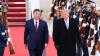 Xi backs AI safety with Trump, draws Taiwan line, urges Iran talks
 The Israeli Lobby Boasts of Its Rule of America
Top Tech News
 Tesla Model 3 killer charges from 10 to 97% in just 9 minutes
 World-first unpowered DNA computer sets speed record
 I Power 5 Buildings Off-Grid. Here's How
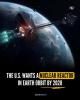 The US government is pushing hard to get a working nuclear fission reactor into space by late 2028
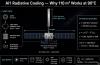 SpaceX Starmind AI in Space Radiator
 China Will Dominate Global Nuclear Energy Through 2035, Analyst Says
 These Absolutely Wild-Looking EVs Are Saudi Arabia's First Homegrown Cars
 BEYOND THE MOON: NASA plans a nuclear-powered fleet to push DEEPER into space
 Big Oil Backs Mazama's $135 Million Bet On Superhot Geothermal
 Quantum compass takes flight on Northrop's Lumberjack drone


After More Than a Decade, Wi-Fi Security Finally Gets a Major Update

Wi-Fi Protected Access II, commonly known as WPA2, has been the standard for securing wireless networks for over a decade, but cracks are starting to show. The industry is now getting ready for its successor and we might see it in new devices this year.
WPA3 will simplify Wi-Fi configuration while providing improved security and data encryption, announced the Wi-Fi Alliance, a standards organization whose members include Apple, Microsoft, Intel, Samsung, Cisco and other major technology companies.
One notable feature of the new standard is that it will protect Wi-Fi connections even when users choose a weak password that "falls short of typical complexity recommendations." This means it will likely include defenses against brute-force dictionary-based attacks, one of the most common methods of breaking into wireless networks.
There aren't any technical details available for WPA3 because the technical specification hasn't been published yet. However, Mathy Vanhoef, an academic researcher from the University of Leuven, believes that the brute-force protection in WPA3 will be achieved by switching to a new key exchange protocol called Simultaneous Authentication of Equals (SAE), or Dragonfly.
A few months ago, Vanhoef found a serious weakness in the four-way handshake of the WPA2 protocol, which is used by clients who know a Wi-Fi network's pre-shared key (password) to negotiate an encryption key with the access point. There are patches to mitigate Vanhoef's attack, dubbed KRACK, but it wouldn't be surprising if the Wi-Fi Alliance opted for a more robust key exchange mechanism in WPA2's successor.