










Breaking News
 The Download: GLOBAL WAR LOOMING, GOVERNMENT AT YOUR DOOR & DOCTORS...
 Episode 495: AI'S FREE PASS, NIH FINALLY WAKES UP & CHILDHOOD DEATH BOMBSHELL
 Xi backs AI safety with Trump, draws Taiwan line, urges Iran talks
 The Israeli Lobby Boasts of Its Rule of America
Top Tech News
 Tesla Model 3 killer charges from 10 to 97% in just 9 minutes
 World-first unpowered DNA computer sets speed record
 I Power 5 Buildings Off-Grid. Here's How
 The US government is pushing hard to get a working nuclear fission reactor into space by late 2028
 SpaceX Starmind AI in Space Radiator
 China Will Dominate Global Nuclear Energy Through 2035, Analyst Says
 These Absolutely Wild-Looking EVs Are Saudi Arabia's First Homegrown Cars
 BEYOND THE MOON: NASA plans a nuclear-powered fleet to push DEEPER into space
 Big Oil Backs Mazama's $135 Million Bet On Superhot Geothermal
 Quantum compass takes flight on Northrop's Lumberjack drone


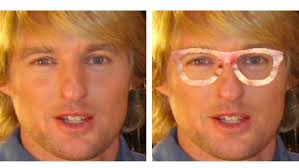
AI-Fooling Glasses Could Be Good Enough to Trick Facial Recognition at Airports
In the not-too-distant future, we'll have plenty of reasons to want protect ourselves from facial detection software. Even now, companies from Facebook to the NFL and Pornhub already use this technology to identify people, sometimes without their consent. Hell, even our lifelines, our precious phones, now use our own faces as a password.
But as fast as this technology develops, machine learning researchers are working on ways to foil it. As described in a new study, researchers at Carnegie Mellon University and the University of North Carolina at Chapel Hill developed a robust, scalable, and inconspicuous way to fool facial recognition algorithms into not recognizing a person.
This paper builds on the same group's work from 2016, only this time, it's more robust and inconspicuous. The method works in a wide variety of positions and scenarios, and doesn't look too much like the person's wearing an AI-tricking device on their face. The glasses are also scalable: The researchers developed five pairs of adversarial glasses that can be used by 90 percent of the population, as represented by the Labeled Faces in the Wild and Google FaceNet datasets used in the study.
It's gotten so good at tricking the system that the researchers made a serious suggestion to the TSA: Since facial recognition is already being used in high-security public places like airports, they've asked the TSA to consider requiring people to remove physical artifacts—hats, jewelry, and of course eyeglasses—before facial recognition scans.
It's a similar concept to how UC Berkeley researchers fooled facial recognition technology into thinking a glasses-wearer was someone else, but in that study, they toyed with the AI algorithm to "poison" it. In this new paper, the researchers don't fiddle with the algorithm they're trying to fool at all. Instead, they rely on manipulation of the glasses to fool the system. It's more like the 3D-printed adversarial objects developed by MIT, which tricked AI into thinking a turtle was a gun by adjusting a few pixels on an image of a turtle. Only this time, it's tricking the algorithm into thinking one person is another, or not a person at all.