










Breaking News
 The Download: GLOBAL WAR LOOMING, GOVERNMENT AT YOUR DOOR & DOCTORS...
 Episode 495: AI'S FREE PASS, NIH FINALLY WAKES UP & CHILDHOOD DEATH BOMBSHELL
 Xi backs AI safety with Trump, draws Taiwan line, urges Iran talks
 The Israeli Lobby Boasts of Its Rule of America
Top Tech News
 Tesla Model 3 killer charges from 10 to 97% in just 9 minutes
 World-first unpowered DNA computer sets speed record
 I Power 5 Buildings Off-Grid. Here's How
 The US government is pushing hard to get a working nuclear fission reactor into space by late 2028
 SpaceX Starmind AI in Space Radiator
 China Will Dominate Global Nuclear Energy Through 2035, Analyst Says
 These Absolutely Wild-Looking EVs Are Saudi Arabia's First Homegrown Cars
 BEYOND THE MOON: NASA plans a nuclear-powered fleet to push DEEPER into space
 Big Oil Backs Mazama's $135 Million Bet On Superhot Geothermal
 Quantum compass takes flight on Northrop's Lumberjack drone


Why Artificial Intelligence Is Not Like Your Brain--Yet
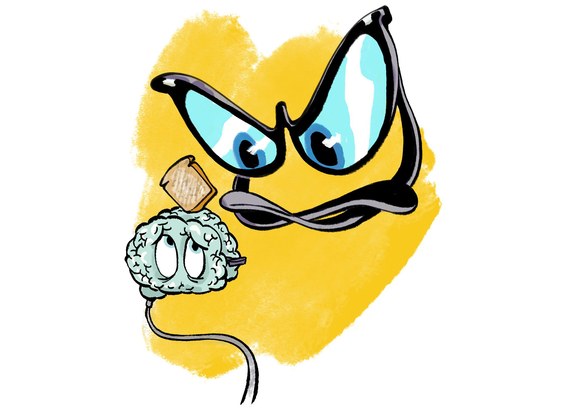
Here's a fun drinking game: Every time someone compares AI to the human brain, take a shot. It'll dull the pain of such mindless metaphorizing—and serve as a reminder that you, an at-least-semiconscious being, have an actual brain that can make real decisions like "Drink!" in the first place. Contra the hype of marketers (as regurgitated by credulous journalists—for shame!), AI resembles the gray matter in your head about as much as a pull-string doll resembles a rocket scientist. There's a similarity in shape, ish: So-called neural networks are software programs inspired by neuroscience. But these systems have only a few million "neurons," which are really just nodes with some input/output connections.
That's puny compared to the 100 billion genuine neurons in your cranium. Read it and weep, Alexa! We're talking 100 trillion synapses. Or 200 trillion. (Of course, cognition is still pretty incognita itself—which means we're "modeling" AIs on something we barely even comprehend.) The truth is, tricks like beating people at Go or diagnosing melanomas owe more to brute-force computing power than to any higher sentience.