










Breaking News
 The Download: GLOBAL WAR LOOMING, GOVERNMENT AT YOUR DOOR & DOCTORS...
 Episode 495: AI'S FREE PASS, NIH FINALLY WAKES UP & CHILDHOOD DEATH BOMBSHELL
 Xi backs AI safety with Trump, draws Taiwan line, urges Iran talks
 The Israeli Lobby Boasts of Its Rule of America
Top Tech News
 Tesla Model 3 killer charges from 10 to 97% in just 9 minutes
 World-first unpowered DNA computer sets speed record
 I Power 5 Buildings Off-Grid. Here's How
 The US government is pushing hard to get a working nuclear fission reactor into space by late 2028
 SpaceX Starmind AI in Space Radiator
 China Will Dominate Global Nuclear Energy Through 2035, Analyst Says
 These Absolutely Wild-Looking EVs Are Saudi Arabia's First Homegrown Cars
 BEYOND THE MOON: NASA plans a nuclear-powered fleet to push DEEPER into space
 Big Oil Backs Mazama's $135 Million Bet On Superhot Geothermal
 Quantum compass takes flight on Northrop's Lumberjack drone


Current and near term quantum computers
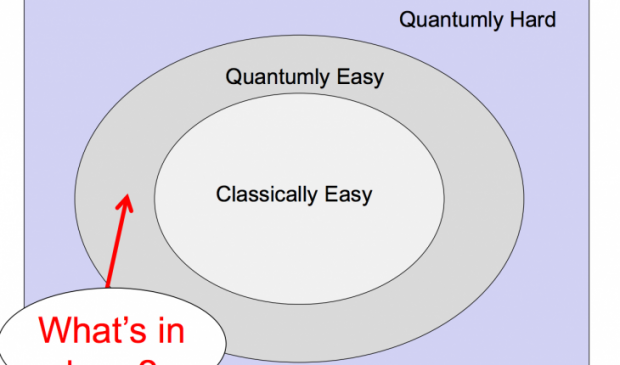
NISQ devices cannot be simulated by brute force using the most powerful currently existing supercomputers.
NISQ will be an interesting tool for exploring physics. It might also have useful applications. But we're not sure about that.
NISQ will not change the world by itself. Rather it is a step toward more powerful quantum technologies of the future.
Potentially transformative scalable quantum computers may still be decades away. We're not sure how long it will take.
Qubit "quality"
The number of qubits is an important metric, but it is not the only thing that matters. The quality of the qubits, and of the "quantum gates" that process the qubits, is also very important. All quantum gates today are noisy, but some are better than
others. Qubit measurements are also noisy.
For today's best hardware (superconducting circuits or trapped ions), the probability of error per (two-qubit) gate is about 1 per 1000, and the probability of error per measurement is about 1 per 100 (or better for trapped ions). We don't yet know whether systems with many qubits will perform that well.