










Breaking News
 The Download: GLOBAL WAR LOOMING, GOVERNMENT AT YOUR DOOR & DOCTORS...
 Episode 495: AI'S FREE PASS, NIH FINALLY WAKES UP & CHILDHOOD DEATH BOMBSHELL
 Xi backs AI safety with Trump, draws Taiwan line, urges Iran talks
 The Israeli Lobby Boasts of Its Rule of America
Top Tech News
 Tesla Model 3 killer charges from 10 to 97% in just 9 minutes
 World-first unpowered DNA computer sets speed record
 I Power 5 Buildings Off-Grid. Here's How
 The US government is pushing hard to get a working nuclear fission reactor into space by late 2028
 SpaceX Starmind AI in Space Radiator
 China Will Dominate Global Nuclear Energy Through 2035, Analyst Says
 These Absolutely Wild-Looking EVs Are Saudi Arabia's First Homegrown Cars
 BEYOND THE MOON: NASA plans a nuclear-powered fleet to push DEEPER into space
 Big Oil Backs Mazama's $135 Million Bet On Superhot Geothermal
 Quantum compass takes flight on Northrop's Lumberjack drone


Design for quantum computing chip scalable to millions of error corrected qubits using...
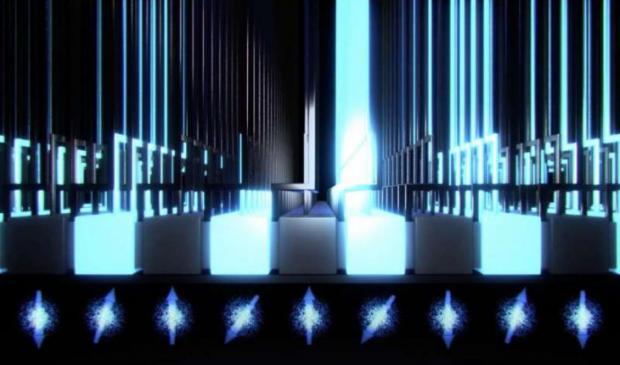
There five leading quantum computing approaches being explored worldwide: silicon spin qubits, ion traps, superconducting loops, diamond vacancies and topological qubits. University of New South Wales has new scalable CMOS chip design based on silicon spin qubits. They believe the design will scale to millions of qubits for universal computation and with error correction.
The main problem with all current approaches is that there is no clear pathway to scaling the number of quantum bits up to the millions needed without the computer becoming huge a system requiring bulky supporting equipment and costly infrastructure.
UNSW relies on its silicon spin qubit approach – which already mimics much of the solid-state devices in silicon that are the heart of the US$380 billion global semiconductor industry and it will work with spin qubit error correcting code into existing chip designs, enabling true universal quantum computation.