










Breaking News
 Walter Block Ejected From Mises Institute Over Defense Of Israel After October 7th
 The Permission Grid: A Blueprint for a Permanent Slave Class
 Banning The Export of Diesel Will Only Make A Bad Situation Worse
 SCARY, DARK, DIRECT, But Is It TRUE? You Decide
Top Tech News
 Tesla Model 3 killer charges from 10 to 97% in just 9 minutes
 World-first unpowered DNA computer sets speed record
 I Power 5 Buildings Off-Grid. Here's How
 The US government is pushing hard to get a working nuclear fission reactor into space by late 2028
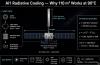 SpaceX Starmind AI in Space Radiator
 China Will Dominate Global Nuclear Energy Through 2035, Analyst Says
 These Absolutely Wild-Looking EVs Are Saudi Arabia's First Homegrown Cars
 BEYOND THE MOON: NASA plans a nuclear-powered fleet to push DEEPER into space
 Big Oil Backs Mazama's $135 Million Bet On Superhot Geothermal
 Quantum compass takes flight on Northrop's Lumberjack drone


Perfectly secure quantum communication

A one-time pad message can be sent securely using quantum mechanics and now also send the original message can be sent securely.
Physicists could check quantum states to see if a one time pad message had been overheard. The leakage is detected after it has occurred. An eavesdropper would already have the information by the time physicists found out.
For a one-time pad, a set of random numbers that can be used to encrypt a message. If the one-time pad is overheard, physicists simply disregard it and send another, until they can be sure that the process was completely private.
Getting rid of one-time pads would make sending secure messages far simpler.
The new method uses some initial photons to check for eavesdropping if there is none then the message is sent.