










Breaking News
 Walter Block Ejected From Mises Institute Over Defense Of Israel After October 7th
 The Permission Grid: A Blueprint for a Permanent Slave Class
 Banning The Export of Diesel Will Only Make A Bad Situation Worse
 SCARY, DARK, DIRECT, But Is It TRUE? You Decide
Top Tech News
 Tesla Model 3 killer charges from 10 to 97% in just 9 minutes
 World-first unpowered DNA computer sets speed record
 I Power 5 Buildings Off-Grid. Here's How
 The US government is pushing hard to get a working nuclear fission reactor into space by late 2028
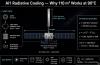 SpaceX Starmind AI in Space Radiator
 China Will Dominate Global Nuclear Energy Through 2035, Analyst Says
 These Absolutely Wild-Looking EVs Are Saudi Arabia's First Homegrown Cars
 BEYOND THE MOON: NASA plans a nuclear-powered fleet to push DEEPER into space
 Big Oil Backs Mazama's $135 Million Bet On Superhot Geothermal
 Quantum compass takes flight on Northrop's Lumberjack drone


Google's AI is binge-watching human behavior on YouTube

Google has curated a set of YouTube clips to help machines learn how humans exist in the world. The AVAs, or "atomic visual actions," are three-second clips of people doing everyday things like drinking water, taking a photo, playing an instrument, hugging, standing or cooking.
Each clip labels the person the AI should focus on, along with a description of their pose and whether they're interacting with an object or another human.
"Despite exciting breakthroughs made over the past years in classifying and finding objects in images, recognizing human actions still remains a big challenge," Google wrote in a recent blog post describing the new dataset. "This is due to the fact that actions are, by nature, less well-defined than objects in videos."
The catalog of 57,600 clips only highlights 80 actions but labels more than 96,000 humans. Google pulled clips from popular movies, emphasizing that they drew from a "variety of genres and countries of origin."