










Breaking News
 Walter Block Ejected From Mises Institute Over Defense Of Israel After October 7th
 The Permission Grid: A Blueprint for a Permanent Slave Class
 Banning The Export of Diesel Will Only Make A Bad Situation Worse
 SCARY, DARK, DIRECT, But Is It TRUE? You Decide
Top Tech News
 Tesla Model 3 killer charges from 10 to 97% in just 9 minutes
 World-first unpowered DNA computer sets speed record
 I Power 5 Buildings Off-Grid. Here's How
 The US government is pushing hard to get a working nuclear fission reactor into space by late 2028
 SpaceX Starmind AI in Space Radiator
 China Will Dominate Global Nuclear Energy Through 2035, Analyst Says
 These Absolutely Wild-Looking EVs Are Saudi Arabia's First Homegrown Cars
 BEYOND THE MOON: NASA plans a nuclear-powered fleet to push DEEPER into space
 Big Oil Backs Mazama's $135 Million Bet On Superhot Geothermal
 Quantum compass takes flight on Northrop's Lumberjack drone


AI implants will allow us to control our homes with our thoughts within 20 years...
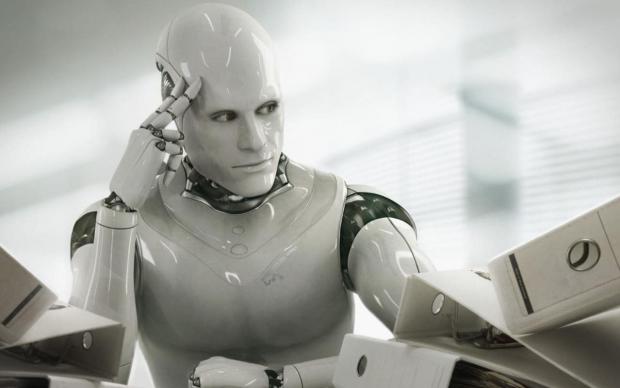
John McNamara, who works at IBM Hursley Innovation Centre, in Hampshire, submitted evidence to the House of Lords Artificial Intelligence Committee, which is considering the economic, ethical and social implications of AI.
Mr McNamara said that within just two decades, technology may have advanced so much that humans and machines are effectively 'melded' together, allowing for huge leaps forward in human consciousness and cognition.
"We may see AI nano-machines being injected into our bodies," he told Peers. "These will provide huge medical benefits, such as being able to repair damage to cells, muscles and bones – perhaps even augment them.
"Beyond this, utilising technology which is already being explored today we see the creation of technology that can meld the biological with the technological, and so be able to enhance human cognitive capability directly, potentially offering greatly improved mental, as well as being able to utilise vast quantities of computing power to augment our own thought processes.