










Breaking News
 Walter Block Ejected From Mises Institute Over Defense Of Israel After October 7th
 The Permission Grid: A Blueprint for a Permanent Slave Class
 Banning The Export of Diesel Will Only Make A Bad Situation Worse
 SCARY, DARK, DIRECT, But Is It TRUE? You Decide
Top Tech News
 Tesla Model 3 killer charges from 10 to 97% in just 9 minutes
 World-first unpowered DNA computer sets speed record
 I Power 5 Buildings Off-Grid. Here's How
 The US government is pushing hard to get a working nuclear fission reactor into space by late 2028
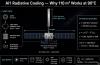 SpaceX Starmind AI in Space Radiator
 China Will Dominate Global Nuclear Energy Through 2035, Analyst Says
 These Absolutely Wild-Looking EVs Are Saudi Arabia's First Homegrown Cars
 BEYOND THE MOON: NASA plans a nuclear-powered fleet to push DEEPER into space
 Big Oil Backs Mazama's $135 Million Bet On Superhot Geothermal
 Quantum compass takes flight on Northrop's Lumberjack drone


China will open a $10 billion quantum computer center and others also investing in quantum computing

This news comes on the heels of the world's first video call made via quantum-encrypted communications and the completion of a quantum-encrypted fiber optic trunk cable.
The National Laboratory for Quantum Information Sciences, slated to open in 2020, has two major research goals: quantum metrology and building a quantum computer. Both efforts would support military and national defense efforts, as well civilian innovators.
Pan Jianwei, a leading Chinese quantum scientist, says that the first general-purpose Chinese quantum computer could have a million times the computing power of all other computers presently in the world. In the computers we use today, information is encoded in a series of bits set as either 1 or 0. In a quantum computer, bits would theoretically be able to hold one, both, or some combination of these states. They could be used to speedily crack encrypted messages or solve complicated research problems involving anything from weather modeling to fusion research and biomedicine, because quantum bits allow certain calculations that happen one by one on a standard computer to occur simultaneously.