










Breaking News
 This Audi EV Set A Guinness World Record By Driving 831 Miles Without Recharging
 How US and China can nimbly escape the Thucydides Trap
 Taiwan's 'silicon shield' is in a race against time
 Bond vigilantes on a savage hunt as global yields run wild
Top Tech News
 Tesla Model 3 killer charges from 10 to 97% in just 9 minutes
 World-first unpowered DNA computer sets speed record
 I Power 5 Buildings Off-Grid. Here's How
 The US government is pushing hard to get a working nuclear fission reactor into space by late 2028
 SpaceX Starmind AI in Space Radiator
 China Will Dominate Global Nuclear Energy Through 2035, Analyst Says
 These Absolutely Wild-Looking EVs Are Saudi Arabia's First Homegrown Cars
 BEYOND THE MOON: NASA plans a nuclear-powered fleet to push DEEPER into space
 Big Oil Backs Mazama's $135 Million Bet On Superhot Geothermal
 Quantum compass takes flight on Northrop's Lumberjack drone


China Is Another Step Closer to Building a Quantum Internet
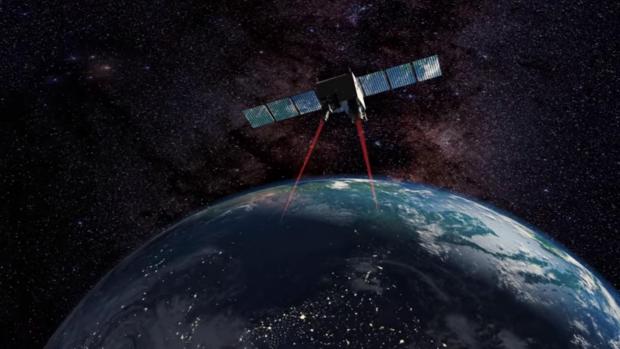
Earlier today, China's pioneering quantum satellite Micius facilitated the first-ever intercontinental video conference using a quantum communications network. The video call connected Chunli Bai, the president of the Chinese Academy of Sciences in Beijing, with Anton Zeilinger, president of the Austrian Academy of Sciences in Vienna, a distance of over 4,600 miles. It was the first real-world demonstration that showed that a global quantum internet is not only possible, but within reach.
A little over a year ago, Bai and his colleagues launched Micius, the first quantum satellite that was meant to serve as a testbed for technologies that would pave the way for a global, space-based quantum communications network. Unlike the normal internet, this quantum internet would be perfectly secure, an issue of paramount importance as we stand on the threshold of the age of quantum computing.
Today, satellites are the backbone of many internet technologies that we use on a day-to-day basis, such as the GPS systems that power Google Maps, satellite televisions, ATMs, and many of the consumer products that make up the Internet of Things. These satellites help route data between internetworked objects all around the globe and when the data is sensitive, such as with banking applications, it is generally encrypted as it is passed between ground stations and satellites. The encryption algorithms used to protect this data are generally based on difficult math problems, such as factoring astronomically large prime numbers.