










Breaking News
 This Audi EV Set A Guinness World Record By Driving 831 Miles Without Recharging
 How US and China can nimbly escape the Thucydides Trap
 Taiwan's 'silicon shield' is in a race against time
 Bond vigilantes on a savage hunt as global yields run wild
Top Tech News
 Tesla Model 3 killer charges from 10 to 97% in just 9 minutes
 World-first unpowered DNA computer sets speed record
 I Power 5 Buildings Off-Grid. Here's How
 The US government is pushing hard to get a working nuclear fission reactor into space by late 2028
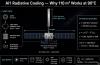 SpaceX Starmind AI in Space Radiator
 China Will Dominate Global Nuclear Energy Through 2035, Analyst Says
 These Absolutely Wild-Looking EVs Are Saudi Arabia's First Homegrown Cars
 BEYOND THE MOON: NASA plans a nuclear-powered fleet to push DEEPER into space
 Big Oil Backs Mazama's $135 Million Bet On Superhot Geothermal
 Quantum compass takes flight on Northrop's Lumberjack drone


Synthetic DNA coverts stem cells to heart muscle is potential tissue regeneration treatment
The scientists responsible for the new molecule believe their breakthrough could be used to turn stem cells into a variety of cell types — paving the way for tissue regeneration.
Human induced pluripotent stem cells are adult stem cells capable of forming any type of cell. Their transformation is dictated by a series of genetic and protein signals. This gene expression process is triggered by specific molecules.
Scientists have previously discovered molecules capable of switching on genetic signals, but have yet to find molecules with the ability to turn off specific genetic signals in pluripotent stem cells.
Researchers at Kyoto University in Japan, however, have developed a new synthetic molecule, PIP-S2, that can alter gene signaling in hiPSCs. The molecule works by binding with a specific section of genetic coding.