










Breaking News
 This Audi EV Set A Guinness World Record By Driving 831 Miles Without Recharging
 How US and China can nimbly escape the Thucydides Trap
 Taiwan's 'silicon shield' is in a race against time
 Bond vigilantes on a savage hunt as global yields run wild
Top Tech News
 Tesla Model 3 killer charges from 10 to 97% in just 9 minutes
 World-first unpowered DNA computer sets speed record
 I Power 5 Buildings Off-Grid. Here's How
 The US government is pushing hard to get a working nuclear fission reactor into space by late 2028
 SpaceX Starmind AI in Space Radiator
 China Will Dominate Global Nuclear Energy Through 2035, Analyst Says
 These Absolutely Wild-Looking EVs Are Saudi Arabia's First Homegrown Cars
 BEYOND THE MOON: NASA plans a nuclear-powered fleet to push DEEPER into space
 Big Oil Backs Mazama's $135 Million Bet On Superhot Geothermal
 Quantum compass takes flight on Northrop's Lumberjack drone


Quantum machine learning
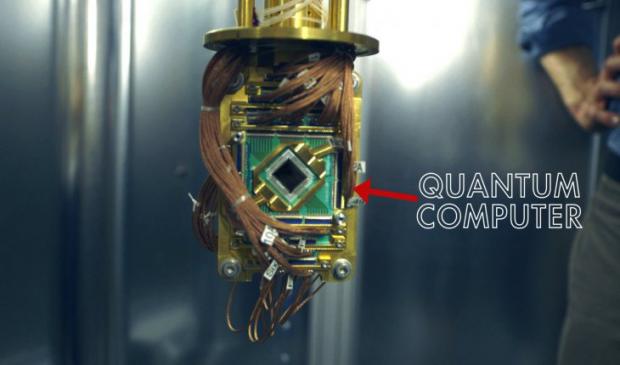
There needs to be more quantum algorithms that can provide a speedup and work needs to be done to make it easier to convert real world problems into a form that can be solved in a quantum computer
There are multiple quantum algorithms exhibiting quantum speedup that could act as subroutines, or building blocks, for quantum machine learning programs.
The input problem could be mitigated to some extent by the development of quantum random access memory (qRAM)—the equivalent to RAM in a conventional computer used to provide the machine with quick access to its working memory. A qRAM can be configured to store classical data but allow the quantum computers to access all that information simultaneously as a superposition, which is required for a variety of quantum algorithms. But the authors note this is still a considerable engineering challenge and may not be sustainable for big data problems.