










Breaking News
 The Property Rights Duality and the Defense of Freedom
 Japan Looks To Palantir For Battlefield AI
 Louisiana Has The Highest Car Ownership Burden In America
 Pharma Looks to Cash in on Psychedelics as Patients Seek Alternatives to Psychotropic Drugs...
Top Tech News
 Voyager 1 approaches one light day from Earth
 Visual Implants
 Renewable Energy Breakthrough! World's Most Efficient Tesla Turbine System
 I Told You So
 Meet Sunbird, a nuclear fusion-powered space tug concept from Pulsar Fusion.
 China and Russia launch 29-nation AI alliance to rival western control of technology
 BREAKING: China has begun manufacturing domestically developed Immersion Deep...
 Idaho's High Desert Becomes Hot Spot For Nuclear Power Revolution
 The World's Largest Electric Aircraft Is About to Take Its First Flight
 Tesla Cybercabs and Superchargers Will Act as Mini Cell Towers for SpaceX Starlink



DARPA leading electronics revolution to go beyond printed circuit boards with modular chiplets
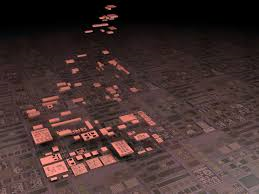
The CHIPS program is part of DARPA's much larger effort, the Electronics Resurgence Initiative, in which we are striving to build an electronics community that mixes the best of the commercial and defense capabilities for national defense," Chappell said.
"If the CHIPS program is successful, we will gain access to a wider variety of specialized blocks that we will be able to integrate into our systems more easily and with lower costs," said Green. "This should be a win for both the commercial and defense sectors."
Among the specific technologies that could emerge from this newly formed research community are compact replacements for entire circuit boards, ultrawideband radio frequency (RF) systems, which require tight integration of fast data converters with powerful processing functions, and, by combining chiplets that provide different accelerator and processor functions, fast-learning systems for teasing out interesting and actionable data from much larger volumes of mundane data. "By bringing the best design capabilities, reconfigurable circuit fabrics, and accelerators from the commercial domain, we should be able to create defense systems just by adding smaller specialized chiplets," said Bill Chappell, director of DARPA's Microsystems Technology Office.