










Breaking News
 Evacuations begin as 'blockbuster' nor'easter barrels toward millions in 12 US states
 Trump's military prepares for Cuba as leaked Pentagon memo sends telling signal...
 Ford v. Hyundai: Henry Ford Must Be Turning In His Grave After New Report
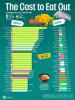 Switzerland Is Still The Most Expensive Place In The World To Eat Out
Top Tech News
 Tesla Model 3 killer charges from 10 to 97% in just 9 minutes
 World-first unpowered DNA computer sets speed record
 I Power 5 Buildings Off-Grid. Here's How
 The US government is pushing hard to get a working nuclear fission reactor into space by late 2028
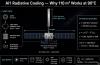 SpaceX Starmind AI in Space Radiator
 China Will Dominate Global Nuclear Energy Through 2035, Analyst Says
 These Absolutely Wild-Looking EVs Are Saudi Arabia's First Homegrown Cars
 BEYOND THE MOON: NASA plans a nuclear-powered fleet to push DEEPER into space
 Big Oil Backs Mazama's $135 Million Bet On Superhot Geothermal
 Quantum compass takes flight on Northrop's Lumberjack drone


Scientists remotely hacked a brain, controlling body movements
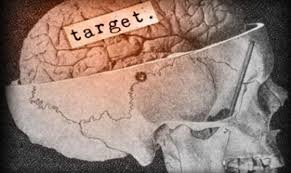
It's an incredibly scary thought, but scientists have managed to accomplish this science fiction nightmare for real, albeit on a much small scale, and they were even able to prompt their test subject to run, freeze in place, or even completely lose control over their limbs. Thankfully, the research will be used for good rather than evil… for now.
The effort, led by physics professor Arnd Pralle, PhD, of the University at Buffalo College of Arts and Sciences, focused on a technique called "magneto-thermal stimulation." It's not exactly a simple process — it requires the implantation of specially built DNA strands and nanoparticles which attach to specific neurons — but once the minimally invasive procedure is over, the brain can be remotely controlled via an alternating magnetic field. When those magnetic inputs are applied, the particles heat up, causing the neurons to fire.