










Breaking News
 EG4 Power Pro VS Ruixu Lithi VS Yixiang Budget Battery! Best Selling Battery Showdown!
 When Society Breaks: The Human Threats You'll Face in a Real SHTF Collapse
 Dubai-Based Emirates Airline Adds Bitcoin and Crypto Payments
 Oh My F#@!ing God, They're Doing It Again
Top Tech News
 What could possibly go wrong? Scientists use AI to design new viruses
 Dual-motor suitcase drive underpins 3,000-hp hypercar
 DoorDash Wins Federal Approval To Fly Its Own Delivery Drones
 Shade-Resistant Solar Cells Retain 97% Efficiency After 2,000 Hours of Testing
 20 Ancient Engineering SECRETS
 Stonehenge Was Reanalyzed by AI -- And the Findings Are Hard to Explain
 After Years Of Delays, Aptera Is Finally Preparing To Build Customer Cars
 'When you kill it, it doesn't die': the jellyfish that has cracked the secret of immorta
 Archer Aviation debuts Halo autonomous VTOL, Thunder's commercial twin
 US Telecoms Slide On Starlink Mobile Threat; Bernstein Sees It As A "Jab, But No Knockout Yet**



Craig Venter's 'Digital-to-Biological Converter' Is Real
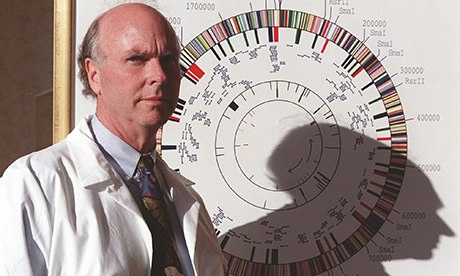
Craig Venter thinks that sending living organisms to other galaxies on spaceships is "definitely" science fiction. It's much more realistic, he thinks, to print them on-site using digital representations of their genome. He calls this "biological teleportation."
Essentially emailing medicine and organisms back and forth between Earth and other planets is just one of the far-future implications of a device developed by Synthetic Genomics, a company founded by Venter, a superstar geneticist and biotechnologist. The tabletop device is called the Digital-to-Biological Converter, or DBC for short, and without a fancy box it looks like a bunch of complicated mechanical crap laid out on a table. The device accepts digital representations of DNA over the internet and reconstructs them on the spot using the chemical building blocks of life—adenine, cytosine, guanine, and thymine. You might recognize their initials from the movie Gattaca.