










Breaking News
 Is Big Pharma Selling Postpartum Depression to New Moms?
 Make Men Men Again: Low T Is Now a National Defense Problem
 Druski: They're Lying To You About Overnight Success!
 $6.27 Diesel Just Hit Harvest. The Grocery Aisle Hasn't Felt It Yet.
Top Tech News
 Tesla Model 3 killer charges from 10 to 97% in just 9 minutes
 World-first unpowered DNA computer sets speed record
 I Power 5 Buildings Off-Grid. Here's How
 The US government is pushing hard to get a working nuclear fission reactor into space by late 2028
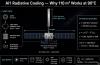 SpaceX Starmind AI in Space Radiator
 China Will Dominate Global Nuclear Energy Through 2035, Analyst Says
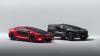 These Absolutely Wild-Looking EVs Are Saudi Arabia's First Homegrown Cars
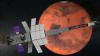 BEYOND THE MOON: NASA plans a nuclear-powered fleet to push DEEPER into space
 Big Oil Backs Mazama's $135 Million Bet On Superhot Geothermal
 Quantum compass takes flight on Northrop's Lumberjack drone


Microsoft co-founder built the world's largest plane to launch rockets into space
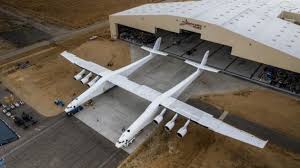
Microsoft co-founder Paul Allen has spent the last six years working on a giant aircraft capable of launching rockets to space. Today, his company Stratolaunch Systems literally rolled that plane out of its hangar in the Mojave Desert for the first time ever.
It's called the Stratolaunch aircraft, and it's massive. The plane has a 385-foot wingspan, which makes it the largest in the world by that metric. It weighs about 500,000 pounds dry, but that can swell to a maximum takeoff weight of 1.3 million pounds. Stratolaunch moves all that weight across the ground on 28 wheels, and eventually will carry its cargo through the air thanks to six 747 aircraft engines.
PAVING A NEW HIGHWAY TO SPACE THROUGH THE SKY
Why so big? Allen plans to use the Stratolaunch plane as an airborne rocket launcher. Instead of taking off from a launchpad, which requires lots of fuel, Stratolaunch will give rockets a head start by first carrying them up into the sky. It's already got one customer, too — private spaceflight company Orbital ATK inked a deal with Stratolaunch Systems last October to use the giant plane as a launcher for its Pegasus XL rocket, which is used to send small satellites into space.
The idea is similar to Allen's first space venture, SpaceShipOne. That aircraft won Allen and his partners the Ansari X Prize in 2004, a competition started by the X Prize Foundation to create the first private reusable spacecraft. SpaceShipOne also went on to serve as the basis for the spacecraft used by Richard Branson's spaceflight company Virgin Galactic. (Virgin Galactic also recently spun off its own air-launcher project into a company called Virgin Orbit, which uses a single 747 aircraft to launch rockets to space.)
But before Stratolaunch takes Orbital's (or anyone else's) rockets for a ride, it has to finish testing the aircraft. Today was just about removing the plane's support scaffolding, letting its wheels experience the full weight of the craft for the first time, and getting it out the door.