










Breaking News
 Is Big Pharma Selling Postpartum Depression to New Moms?
 Make Men Men Again: Low T Is Now a National Defense Problem
 Druski: They're Lying To You About Overnight Success!
 $6.27 Diesel Just Hit Harvest. The Grocery Aisle Hasn't Felt It Yet.
Top Tech News
 Tesla Model 3 killer charges from 10 to 97% in just 9 minutes
 World-first unpowered DNA computer sets speed record
 I Power 5 Buildings Off-Grid. Here's How
 The US government is pushing hard to get a working nuclear fission reactor into space by late 2028
 SpaceX Starmind AI in Space Radiator
 China Will Dominate Global Nuclear Energy Through 2035, Analyst Says
 These Absolutely Wild-Looking EVs Are Saudi Arabia's First Homegrown Cars
 BEYOND THE MOON: NASA plans a nuclear-powered fleet to push DEEPER into space
 Big Oil Backs Mazama's $135 Million Bet On Superhot Geothermal
 Quantum compass takes flight on Northrop's Lumberjack drone


Elon will likely reveal more details on his Big Mars Colonization Rocket...
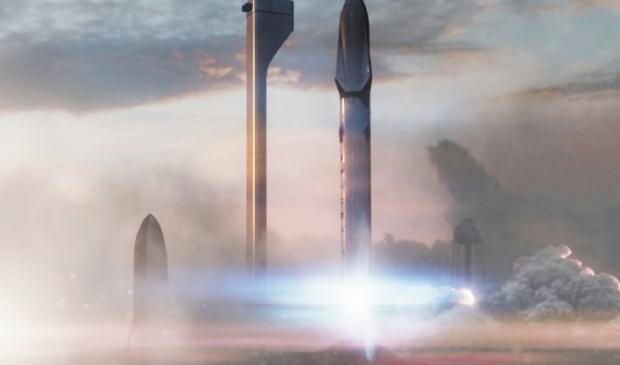
Elon Musk will likely reveal more details about the Interplanetary Transport system on the one year anniversary of the first announcement at the 2016 International Astronautical conference. IAC2017, hosted by the Space Industry Association of Australia (SIAA) will take place in Adelaide, Australia from 25 – 29 September 2017.
Zubrin was struck by many good and powerful ideas in the Musk plan. However, Musk's plan assembled some of those good ideas in an extremely suboptimal way, making the proposed system impractical. Still, with some corrections, a system using the core concepts Musk laid out could be made attractive — not just as an imaginative concept for the colonization of Mars, but as a means of meeting the nearer-at-hand challenge of enabling human expeditions to the planet.
Zubrin explains the conceptual flaws of the new SpaceX plan, showing how they can be corrected to benefit, first, the near-term goal of initiating human exploration of the Red Planet, and then, with a cost-effective base-building and settlement program, the more distant goal of future Mars colonization.