










Breaking News
 Is Big Pharma Selling Postpartum Depression to New Moms?
 Make Men Men Again: Low T Is Now a National Defense Problem
 Druski: They're Lying To You About Overnight Success!
 $6.27 Diesel Just Hit Harvest. The Grocery Aisle Hasn't Felt It Yet.
Top Tech News
 Tesla Model 3 killer charges from 10 to 97% in just 9 minutes
 World-first unpowered DNA computer sets speed record
 I Power 5 Buildings Off-Grid. Here's How
 The US government is pushing hard to get a working nuclear fission reactor into space by late 2028
 SpaceX Starmind AI in Space Radiator
 China Will Dominate Global Nuclear Energy Through 2035, Analyst Says
 These Absolutely Wild-Looking EVs Are Saudi Arabia's First Homegrown Cars
 BEYOND THE MOON: NASA plans a nuclear-powered fleet to push DEEPER into space
 Big Oil Backs Mazama's $135 Million Bet On Superhot Geothermal
 Quantum compass takes flight on Northrop's Lumberjack drone


Screens of the future could be made with transparent silver
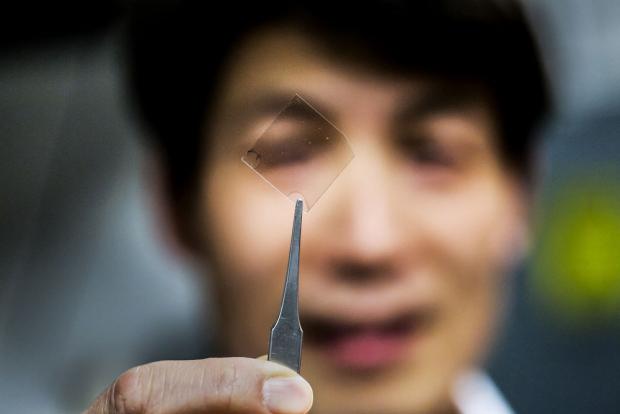
There's a good chance you're looking at—or through—some indium tin oxide (ITO) right now. This ceramic material conducts electricity, but is transparent, which makes it crucial for the production of screens of all kinds, like those on smartphones and LCD televisions. But indium isn't pulled out of the ground directly—it's a byproduct of refining other metals—and the U.S. needs to import it from places like Canada and China. As a result, researchers have been looking for a viable ITO replacement for more than a decade, and it may come in the form of a super-thin layer of silver.
It's not that indium is insanely expensive—it cost about $109 per pound on average last year, on the free market—nor is it incredibly rare.
But "its supply is fixed," Ioannis Kymissis, an associate professor of electrical engineering at Columbia University, says, "because there's no real primary source."
A primary reason to search for an alternative is to "reduce the use of relatively scarce materials," Kymissis says, with an eye towards sustainability. Another is that ITO isn't good for flexible, bendable displays, because it's brittle.