










Breaking News
 Is Big Pharma Selling Postpartum Depression to New Moms?
 Make Men Men Again: Low T Is Now a National Defense Problem
 Druski: They're Lying To You About Overnight Success!
 $6.27 Diesel Just Hit Harvest. The Grocery Aisle Hasn't Felt It Yet.
Top Tech News
 Tesla Model 3 killer charges from 10 to 97% in just 9 minutes
 World-first unpowered DNA computer sets speed record
 I Power 5 Buildings Off-Grid. Here's How
 The US government is pushing hard to get a working nuclear fission reactor into space by late 2028
 SpaceX Starmind AI in Space Radiator
 China Will Dominate Global Nuclear Energy Through 2035, Analyst Says
 These Absolutely Wild-Looking EVs Are Saudi Arabia's First Homegrown Cars
 BEYOND THE MOON: NASA plans a nuclear-powered fleet to push DEEPER into space
 Big Oil Backs Mazama's $135 Million Bet On Superhot Geothermal
 Quantum compass takes flight on Northrop's Lumberjack drone


Europe has a five year project to scale up molecular biocomputers which could...
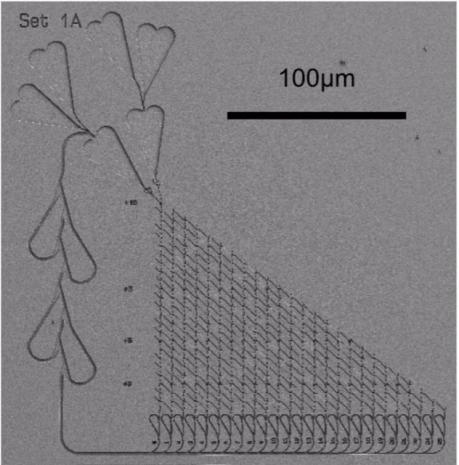
The EU Horizon 2020 has launched Bio4Comp, a five-year €6.1M project to build more powerful and safer biocomputers that could outperform quantum computing.
The Bio4Comp project has the ambitious goal of building a computer with greater processing speed and lower energy consumption than any of the most advanced computers existing today. Ultimately, this could translate into enabling large, error-free security software to be fast enough for practical use, potentially wiping out all current security concerns.
A total of €6.1M have been awarded to an European team of researchers from TU Dresden, Fraunhofer-Gesellschaft, Lund University, Linnaeus University and Bar Ilan University, as well as the British company Molecular Sense.
"Practically all really interesting mathematical problems of our time cannot be computed efficiently with our current computer technology," says Dan V. Nicolau from Molecular Sense, who had the original idea of harnessing the power of biomolecules to build better computers. The team plans to solve this problem by scaling up its first biocomputer prototype, whose mechanisms have been published in the journal PNAS.