










Breaking News
 Is Big Pharma Selling Postpartum Depression to New Moms?
 Make Men Men Again: Low T Is Now a National Defense Problem
 Druski: They're Lying To You About Overnight Success!
 $6.27 Diesel Just Hit Harvest. The Grocery Aisle Hasn't Felt It Yet.
Top Tech News
 Tesla Model 3 killer charges from 10 to 97% in just 9 minutes
 World-first unpowered DNA computer sets speed record
 I Power 5 Buildings Off-Grid. Here's How
 The US government is pushing hard to get a working nuclear fission reactor into space by late 2028
 SpaceX Starmind AI in Space Radiator
 China Will Dominate Global Nuclear Energy Through 2035, Analyst Says
 These Absolutely Wild-Looking EVs Are Saudi Arabia's First Homegrown Cars
 BEYOND THE MOON: NASA plans a nuclear-powered fleet to push DEEPER into space
 Big Oil Backs Mazama's $135 Million Bet On Superhot Geothermal
 Quantum compass takes flight on Northrop's Lumberjack drone


Study: Potatoes can grow on Mars
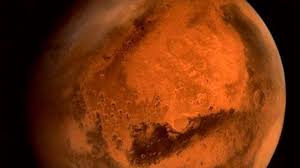
CubeSat indicator experiments prove potatoes can grow on Mars. The findings show potatoes can also grow under extreme conditions on Earth.
Scientists with the International Potato Center created Mars-like growing conditions inside a CubeSat designed by engineers at the University of Engineering and Technology in Lima, Peru. The potato plants inside the experimental box are reportedly thriving.
The box mimics the day-night patterns of Mars, as well as its temperature, air pressure and atmospheric composition. Sensors inside the hermetically-sealed box monitor the progress of the tubers.
"Growing crops under Mars-like conditions is an important phase of this experiment," Julio Valdivia-Silva, a research associate with the SETI Institute, said in a news release. "If the crops can tolerate the extreme conditions that we are exposing them to in our CubeSat, they have a good chance to grow on Mars. We will do several rounds of experiments to find out which potato varieties do best. We want to know what the minimum conditions are that a potato needs to survive."
The genome of the potato plant is dynamic. Its genes boast considerable adaptive potential. Researchers have previously engineered potatoes to survive salty soils and drought conditions.