










Breaking News
 Is Big Pharma Selling Postpartum Depression to New Moms?
 Make Men Men Again: Low T Is Now a National Defense Problem
 Druski: They're Lying To You About Overnight Success!
 $6.27 Diesel Just Hit Harvest. The Grocery Aisle Hasn't Felt It Yet.
Top Tech News
 Tesla Model 3 killer charges from 10 to 97% in just 9 minutes
 World-first unpowered DNA computer sets speed record
 I Power 5 Buildings Off-Grid. Here's How
 The US government is pushing hard to get a working nuclear fission reactor into space by late 2028
 SpaceX Starmind AI in Space Radiator
 China Will Dominate Global Nuclear Energy Through 2035, Analyst Says
 These Absolutely Wild-Looking EVs Are Saudi Arabia's First Homegrown Cars
 BEYOND THE MOON: NASA plans a nuclear-powered fleet to push DEEPER into space
 Big Oil Backs Mazama's $135 Million Bet On Superhot Geothermal
 Quantum compass takes flight on Northrop's Lumberjack drone


India Launches Record-Breaking 104 Satellites on Single Rocket
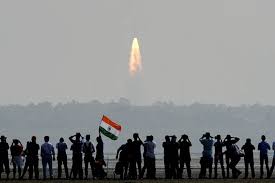
The Polar Satellite Launch Vehicle (PSLV) blasted off from India's Satish Dhawan Space Centre at 10:58 p.m. EST (0358 GMT on Feb. 15) with three satellites from India and 101 smaller nano satellites (also called nanosats) from five other countries: the U.S., the Netherlands, Israel, Kazakhstan and Switzerland. This number crushes the previous record of 37 satellites sent into orbit aboard a single Russian Dnepr rocket in June 2014.
With a combined payload of about 3,040 lbs. (1,380 kilograms), the mission aims to launch the Cartosat-2 series satellite for Earth observation and the other 103 spacecraft into polar sun-synchronous orbit at an altitude of 314 miles (505 kilometers), ISRO officials said. [India's Record-Breaking Satellite Launch in Photos]