










Breaking News
 Is Big Pharma Selling Postpartum Depression to New Moms?
 Make Men Men Again: Low T Is Now a National Defense Problem
 Druski: They're Lying To You About Overnight Success!
 $6.27 Diesel Just Hit Harvest. The Grocery Aisle Hasn't Felt It Yet.
Top Tech News
 Tesla Model 3 killer charges from 10 to 97% in just 9 minutes
 World-first unpowered DNA computer sets speed record
 I Power 5 Buildings Off-Grid. Here's How
 The US government is pushing hard to get a working nuclear fission reactor into space by late 2028
 SpaceX Starmind AI in Space Radiator
 China Will Dominate Global Nuclear Energy Through 2035, Analyst Says
 These Absolutely Wild-Looking EVs Are Saudi Arabia's First Homegrown Cars
 BEYOND THE MOON: NASA plans a nuclear-powered fleet to push DEEPER into space
 Big Oil Backs Mazama's $135 Million Bet On Superhot Geothermal
 Quantum compass takes flight on Northrop's Lumberjack drone


Websites Can Now Track You Online Across Multiple Web Browsers
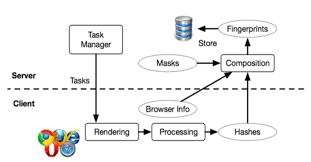
A team of researchers has recently developed a cross-browser fingerprinting technique — the first reliable technique to accurately track users across multiple browsers based on information like extensions, plugins, time zone and whether or not an ad blocker is installed.
Previous fingerprinting methods usually only work across a single browser, but the new method uses operating system and hardware level features and works across multiple browsers.This new fingerprinting technique ties digital fingerprint left behind by a Firefox browser to the fingerprint from a Chrome browser or Windows Edge running on the same device.
This makes the method particularly useful to advertisers, enabling them to continue serving targeted advertisements to online users, even if they avoid them by switching browsers.