Breaking News
 Is Big Pharma Selling Postpartum Depression to New Moms?
 Make Men Men Again: Low T Is Now a National Defense Problem
 Druski: They're Lying To You About Overnight Success!
 $6.27 Diesel Just Hit Harvest. The Grocery Aisle Hasn't Felt It Yet.
Top Tech News
 Tesla Model 3 killer charges from 10 to 97% in just 9 minutes
 World-first unpowered DNA computer sets speed record
 I Power 5 Buildings Off-Grid. Here's How
 The US government is pushing hard to get a working nuclear fission reactor into space by late 2028
 SpaceX Starmind AI in Space Radiator
 China Will Dominate Global Nuclear Energy Through 2035, Analyst Says
 These Absolutely Wild-Looking EVs Are Saudi Arabia's First Homegrown Cars
 BEYOND THE MOON: NASA plans a nuclear-powered fleet to push DEEPER into space
 Big Oil Backs Mazama's $135 Million Bet On Superhot Geothermal
 Quantum compass takes flight on Northrop's Lumberjack drone


Large scale microwave trapped ion universal quantum computer design ...
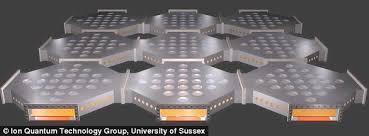
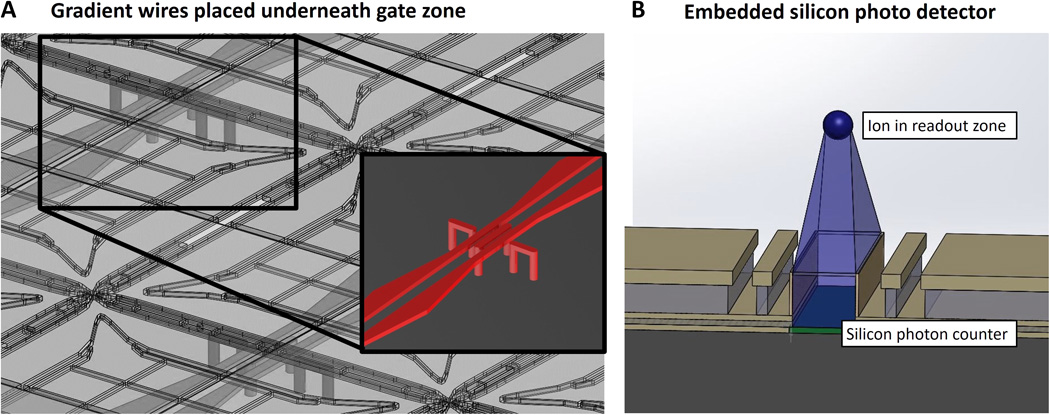
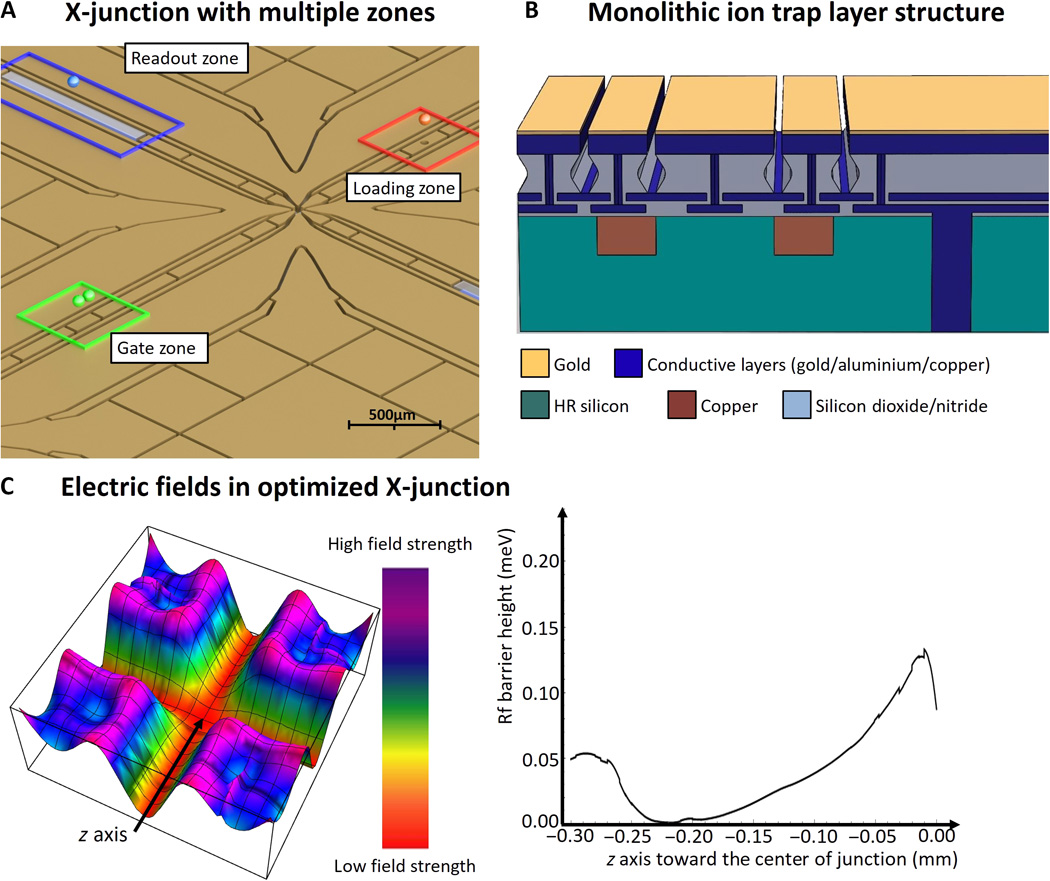
The microwave trapped ion universal quantum computer design work features a new invention permitting actual quantum bits to be transmitted between. individual quantum computing modules in order to obtain a fully modular large-scale machine capable of reaching nearly arbitrary large computational processing powers.
Previously, scientists had proposed using fibre optic connections to connect individual computer modules. The new invention introduces connections created by electric fields that allow charged atoms (ions) to be transported from one module to another. This new approach allows 100,000 times faster connection speeds between individual quantum computing modules compared to current state-of-the-art fibre link technology.
The new blueprint is the work of an international team of scientists from the University of Sussex (UK), Google (USA), Aarhus University (Denmark), RIKEN (Japan) and Siegen University (Germany).
They estimate that a 2 billion trapped ion system could be used to crack 2048 bit encryption in 110 days. In December 2009, Lenstra and his team announced the factorization of a 768-bit RSA modulus.
In 2012, a 923 bit code was cracked using 21 computers
The Lenstra group estimated that factoring a 1024-bit RSA modulus would be about 1,000 times harder than their record effort with the 768-bit modulus, or in other words, on the same hardware, with the same conditions, it would take about 1,000 times as long. They also estimated that their record achievement would have taken 1,500 years if they normalized processing power to that of the standard desktop machine at the time - this assumption is based on a 2.2 Ghz AMD Opteron processor with 2GB RAM. Breaking a DigiCert 2048-bit SSL certificate would take about 4.3 billion times longer (using the same standard desktop processing) than doing it for a 1024-bit key. It is therefore estimated, that standard desktop computing power would take 4,294,967,296 x 1.5 million years to break a DigiCert 2048-bit SSL certificate. Or, in other words, a little over 6.4 quadrillion years.
As a next step, the team will construct a prototype quantum computer, based on this design, at the University.