










Breaking News
 Is Big Pharma Selling Postpartum Depression to New Moms?
 Make Men Men Again: Low T Is Now a National Defense Problem
 Druski: They're Lying To You About Overnight Success!
 $6.27 Diesel Just Hit Harvest. The Grocery Aisle Hasn't Felt It Yet.
Top Tech News
 Tesla Model 3 killer charges from 10 to 97% in just 9 minutes
 World-first unpowered DNA computer sets speed record
 I Power 5 Buildings Off-Grid. Here's How
 The US government is pushing hard to get a working nuclear fission reactor into space by late 2028
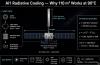 SpaceX Starmind AI in Space Radiator
 China Will Dominate Global Nuclear Energy Through 2035, Analyst Says
 These Absolutely Wild-Looking EVs Are Saudi Arabia's First Homegrown Cars
 BEYOND THE MOON: NASA plans a nuclear-powered fleet to push DEEPER into space
 Big Oil Backs Mazama's $135 Million Bet On Superhot Geothermal
 Quantum compass takes flight on Northrop's Lumberjack drone


SpaceX's hyperloop race was a milestone for the futuristic transportation system
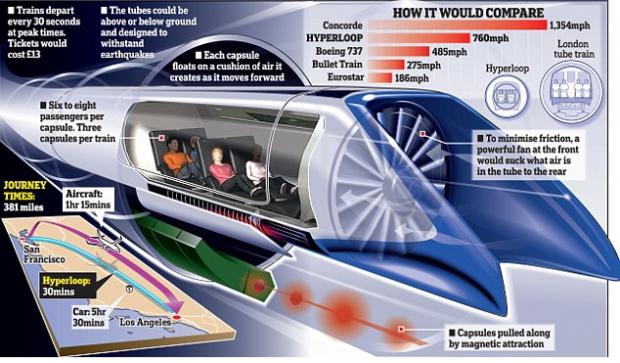
Last weekend, excitement ran high at the SpaceX Hyperloop competition, a culmination of a year's work on dogged research and development to imagine and build the transportation of the future. Just before the first finalist's pod launched, a rustle ran through the crowd of SpaceX employees, hyperloop teams, and journalists. Elon Musk appeared on the stage.
Back in 2013, Musk released his white paper that theorized the possibility of aerodynamic aluminum capsules filled with passengers or cargo that could travel in a nearly airless tube at roughly the speed of sound. "Hyperloop Alpha" teased the possibility of traveling from San Francisco to Los Angeles in just 30 minutes. His idea inspired engineers and investors around the world, ultimately prompting Musk to launch the design contest. Part one was held at Texas A&M University last year, while part two — in which actual pods were propelled through an actual hyperloop tube, a global first — wrapped up last Sunday.