










Breaking News
 Is Big Pharma Selling Postpartum Depression to New Moms?
 Make Men Men Again: Low T Is Now a National Defense Problem
 Druski: They're Lying To You About Overnight Success!
 $6.27 Diesel Just Hit Harvest. The Grocery Aisle Hasn't Felt It Yet.
Top Tech News
 Tesla Model 3 killer charges from 10 to 97% in just 9 minutes
 World-first unpowered DNA computer sets speed record
 I Power 5 Buildings Off-Grid. Here's How
 The US government is pushing hard to get a working nuclear fission reactor into space by late 2028
 SpaceX Starmind AI in Space Radiator
 China Will Dominate Global Nuclear Energy Through 2035, Analyst Says
 These Absolutely Wild-Looking EVs Are Saudi Arabia's First Homegrown Cars
 BEYOND THE MOON: NASA plans a nuclear-powered fleet to push DEEPER into space
 Big Oil Backs Mazama's $135 Million Bet On Superhot Geothermal
 Quantum compass takes flight on Northrop's Lumberjack drone


Spacex has successful launch and good landing of the first stage
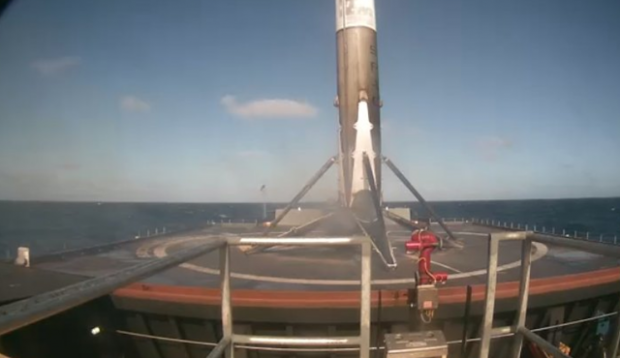
Over the next 14 months, the company plans six additional Falcon 9 launches to deploy 60 more Iridium satellites that will completely replace the constellation.
In the short-term, the successful launch helps put SpaceX back on track. The explosion and subsequent four-month grounding created a backlog of launches, including cargo missions for NASA to the International Space Station. September's explosion was SpaceX's second failure in 15 months; a Falcon 9 rocket carrying NASA cargo disintegrated in flight in June 2015
SpaceX hopes to launch its larger Falcon Heavy this spring. The Heavy, years behind schedule, would become the world's most powerful rocket since NASA retired the Saturn 5 more than 40 years ago.
SpaceX also plans to refly one of its recovered boosters this spring. By reusing instead of throwing away rocket boosters, SpaceX hopes to significantly reduce the cost of launches.