










Breaking News
 Is Big Pharma Selling Postpartum Depression to New Moms?
 Make Men Men Again: Low T Is Now a National Defense Problem
 Druski: They're Lying To You About Overnight Success!
 $6.27 Diesel Just Hit Harvest. The Grocery Aisle Hasn't Felt It Yet.
Top Tech News
 Tesla Model 3 killer charges from 10 to 97% in just 9 minutes
 World-first unpowered DNA computer sets speed record
 I Power 5 Buildings Off-Grid. Here's How
 The US government is pushing hard to get a working nuclear fission reactor into space by late 2028
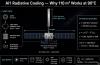 SpaceX Starmind AI in Space Radiator
 China Will Dominate Global Nuclear Energy Through 2035, Analyst Says
 These Absolutely Wild-Looking EVs Are Saudi Arabia's First Homegrown Cars
 BEYOND THE MOON: NASA plans a nuclear-powered fleet to push DEEPER into space
 Big Oil Backs Mazama's $135 Million Bet On Superhot Geothermal
 Quantum compass takes flight on Northrop's Lumberjack drone


Microsoft stored an OK Go music video in strings of DNA
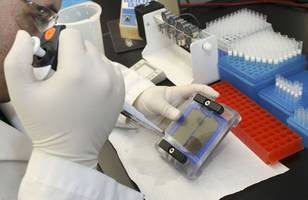
Hundreds of years from now, today's DVDs, web servers, and flash drives will all be long dead. But one copy of a music video — for alternative rock band OK Go's song "This Too Shall Pass" — could still be playing. The Rube Goldberg-inspired video is part of a 202-megabyte cache of data that Microsoft and the University of Washington say they've written to DNA storage — the largest known DNA storage trove created to date.
This DNA data storage project is a research partnership between Microsoft and researchers at the University of Washington's computer science and engineering department, with help from startup Twist Bioscience. Its goal is to advance the technology that could one day make synthetic strands of DNA a viable alternative to conventional hard drives, optical disks, and other storage methods. DNA storage could offer a couple of major advantages over anything we have today. It can theoretically hold huge amounts of data at incredible density, and kept in cool, dry, and dark conditions, it could maintain its integrity for hundreds or even thousands of years.
PREVIOUS PROJECTS ENCODED A FULL BOOK AND MARTIN LUTHER KING, JR.'S "I HAVE A DREAM"
The idea has been in the proof of concept stage for years, and so far, the information stored has been modest. In 2012, Harvard Medical School researchers stored a digital book in DNA. In 2013, the European Bioinformatics Institutecopied 739 kilobytes of sound, images, and text, including a 26-second audio clip of Martin Luther King, Jr.'s "I Have a Dream" speech. More recently, Harvard Medical School and a Technicolor research group reported storing and retrieving 22 megabytes that included French silent film A Trip to the Moon. This new work builds on previous efforts, and — possibly — marks another move toward a technology that could have real-world applications.
In order to write data to DNA, researchers translate the binary code of a file into the nucleotide molecules that form DNA's building blocks, assigning different base pairs to represent ones and zeroes. In this case, Twist Bioscience created custom strings of DNA based on the resulting patterns, encoding the OK Go video, copies of the Universal Declaration of Human Rights in different languages, the top 100 books from Project Gutenberg, and the Crop Trust seed database. Microsoft principal researcher Karin Strauss says the team picked OK Go because "they're very innovative and are bringing different things from different areas into their field, and we feel we are doing something very similar."